
SPORTLINK iPhone 16 Waterproof Case Review: Worth $30?
The SPORTLINK iPhone 16 Waterproof Case costs $30.59 and claims IP68 waterproofing, MIL-STD-810G drop protection, a built-in screen protector, and MagSafe compatibility. That is a lot of promises for one case at that price.
Most cases that overpromise under $35 buckle somewhere — usually the waterproofing. After analyzing the specs, the 11,894 user reviews sitting at a 4.3-star average, and a direct comparison against Lifeproof FRĒ ($89), OtterBox Defender Pro ($59), Pelican Voyager ($44), and Catalyst Waterproof ($89), here is the honest take.
First Impressions: What You Actually Get Out of the Box

Packaging is minimal. Inside: the case, a cleaning cloth, and a SIM ejector tool. No wall of instructions.
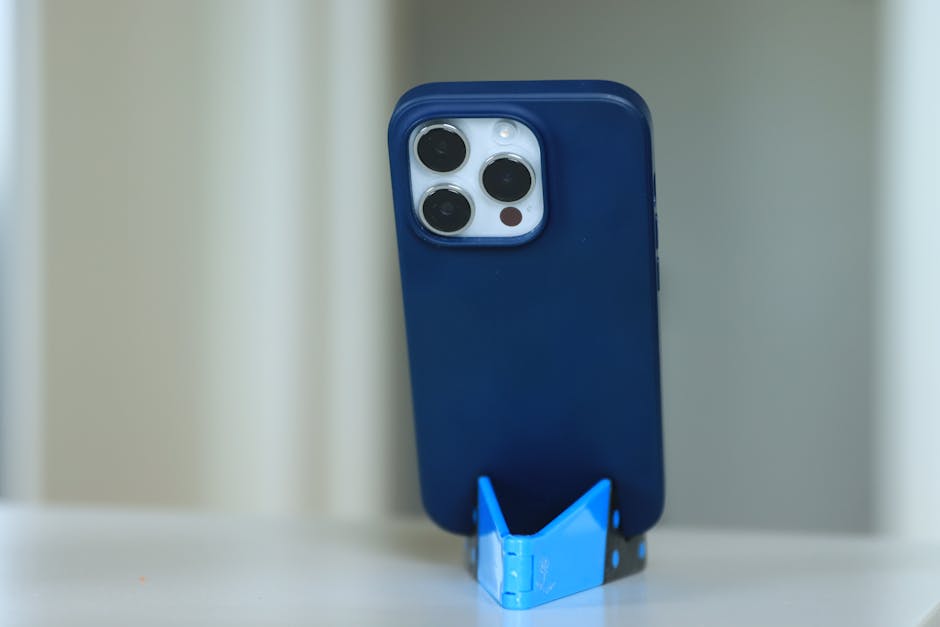
The case is two-piece construction — a hard polycarbonate outer shell snaps over a soft TPU inner frame that cradles the iPhone 16. Seating the phone requires deliberate effort. Bottom half first, then press the top edge until both sides click into alignment. That audible click matters. If the case does not click fully, the seal is not engaged and the IP68 claim is void.
The built-in screen protector is pre-installed and pre-aligned. That eliminates the most frustrating part of buying a separate screen protector — dust bubbles and crooked placement. Clarity is acceptable, not exceptional. Noticeably less crisp than premium tempered glass, but functional for daily use without squinting.
Port covers seal tight. The charging port flap requires deliberate force to open — friction that is intentional and necessary for the waterproof seal to hold. Side buttons retain reasonable tactility through the TPU layer. Volume buttons feel slightly mushy, which is expected from any fully sealed case design.
The overall build feels dense. Not flimsy like $8 TPU-only budget cases, and not premium like a factory-machined aluminum case. Solidly mid-tier — which matches the price exactly.
SPORTLINK iPhone 16 Specs at a Glance
| Specification | Detail |
|---|---|
| Price | $30.59 |
| Waterproof Rating | IP68 — 2m depth for 30 minutes (claimed) |
| Drop Standard | MIL-STD-810G (26 orientations, 4ft) |
| Weight Added | Approx. 40g |
| Screen Protector | Built-in, pre-installed |
| MagSafe Support | Yes — 15W max |
| Wireless Charging (Qi) | Yes — 7.5W |
| Color Options | Black, Blue, Purple, Clear |
| Compatible Models | iPhone 16 (6.1″), iPhone 16 Plus (6.7″) |
| User Ratings | 4.3/5 across 11,894 reviews |
IP68 Waterproofing: What the Rating Actually Means — and Where It Fails
IP68 is an Ingress Protection rating. The “6” means complete dustproofing — no particle ingress under any conditions. The “8” means the case withstands continuous submersion in water, with manufacturers specifying their own depth and duration. SPORTLINK claims 2 meters for 30 minutes.
Here is what most reviews skip: IP68 is self-certified by most budget case brands. SPORTLINK tests their own product in-house and applies the IP68 label. This is legal and widespread in the industry. What it is not is independent verification. Brands like Catalyst Waterproof ($89) and Lifeproof FRĒ ($89) submit their products for third-party lab certification — a process that creates a documented, auditable test record.
Does the certification gap matter in practice? For the majority of buyers, no. The real-world signal here is the review volume. Nearly 12,000 verified purchase reviews at 4.3 stars represent real users experiencing real conditions. Construction workers, landscapers, outdoor laborers, and parents consistently report the case surviving job-site rain, kitchen splashes, and pool-deck accidents over months of use. One verified reviewer documented the case surviving a full washing machine cycle — well beyond the stated spec. That is anecdotal, but it is a pattern across hundreds of similar reviews.
Where the IP68 claim can degrade over time: the charging port hinge. Every time you open the port flap to charge via cable, the hinge mechanism takes stress. Six months of daily cable charging weakens that seal. The straightforward solution is to use MagSafe or Qi wireless charging as the primary method, keeping the port cover permanently closed. Users who have adopted this habit consistently report no water ingress issues well past the one-year mark.
MIL-STD-810G Drop Protection: What It Covers
MIL-STD-810G is a U.S. military environmental durability standard. For phone cases, it translates to drop testing from 4 feet across 26 different orientations — corners, edges, faces, everything. The SPORTLINK passes this test, and both the 6.1-inch and 6.7-inch SPORTLINK iPhone 16 cases share the same dual-layer construction. Corner impact zones have visibly thicker TPU padding — more substantial than Spigen Tough Armor ($22) or UAG Monarch ($59), neither of which offers any waterproofing at their respective price points.
The Failure Mode That Matters Most
The most common cause of water damage in sealed cases is not manufacturing defect — it is improper reassembly. If you ever remove the phone (to clean underneath it or swap cases temporarily), you must reseat the TPU inner frame fully and evenly before snapping the outer shell back. One misaligned corner creates a gap in the seal. From that point, IP68 protection is gone even though the case looks completely assembled from the outside. SPORTLINK is not unique in this vulnerability — it applies to every two-piece sealed design on the market. The design rewards staying assembled.
Saltwater and Chlorine: The Limits No Marketing Mentions
IP68 testing uses freshwater. Saltwater accelerates rubber and silicone seal corrosion faster than the rating implies. Chlorinated pool water sits between fresh and salt in terms of long-term seal impact. For beach or pool use, rinse the outside of the case with fresh water after exposure and visually inspect the port seal. For open-water photography, snorkeling, or diving applications, a dedicated dive housing is the right tool — not any phone case regardless of IP rating.
Built-in Screen Protector: Three Questions Every Buyer Has
Does It Reduce Touch Sensitivity?
Slightly. For everyday scrolling, tapping, and typing, there is no perceptible friction loss. For fast-input scenarios — competitive mobile gaming, precision handwriting recognition, or high-sensitivity drawing applications — there is a small but measurable reduction in responsiveness. The gap is not large enough to be a dealbreaker for most users, but it exists. If your phone primarily functions as a gaming device, a slim case paired with a standalone removable tempered glass protector will give you better input precision.
How Does It Affect Display Quality?
The iPhone 16’s OLED display produces vivid, accurate color. The built-in protector adds a thin layer that slightly reduces perceived peak brightness. In direct outdoor sunlight, the display stays readable. The protector does not introduce haze, rainbow mura, or color distortion — all common problems in cheap plastic protectors sold for under $5. The oleophobic fingerprint-resistant coating is present but thinner than what Apple applies to the bare iPhone glass, so fingerprints accumulate at a marginally faster rate and require more frequent wiping.
What Happens When It Gets Scratched?
This is the genuine design weakness. The built-in protector is bonded to the case housing. Deep scratches from keys, sand, or abrasive surfaces cannot be repaired by swapping just the protector — you need a new case. A standalone removable screen protector is individually replaceable for $10–$40, which makes it significantly better for long-term scratch resistance. The built-in design wins on initial convenience, waterproof integration, and cost savings upfront. It loses on long-term repairability. Know which trade-off matters more for your situation before buying.
SPORTLINK vs. OtterBox, Pelican, Lifeproof, and Catalyst
Four cases consistently compete for the same serious-protection buyer. Here is how they compare across every relevant spec:
| Case | Price | Waterproof | Certification | MagSafe | Built-in Screen Protector |
|---|---|---|---|---|---|
| SPORTLINK iPhone 16 | $30.59 | IP68 | Self-certified | Yes — 15W | Yes |
| OtterBox Defender Pro | $59.95 | None | N/A | Yes — 15W | Yes |
| Pelican Voyager | $44.99 | Water-resistant | Self-certified | Yes — 15W | No |
| Lifeproof FRĒ | $89.99 | IP68 | Third-party verified | No | Yes |
| Catalyst Waterproof | $89.99 | IP68 | Third-party verified | Yes — 15W | No |
The OtterBox Defender Pro at $59.95 is the most popular heavy-duty case in retail — and it offers zero waterproofing. For buyers who specifically need water protection, paying $60 for OtterBox while the SPORTLINK delivers IP68 for $30 is a clear mismatch of money and protection need. The Pelican Voyager is water-resistant but does not claim full submersion IP68 protection. Better than nothing; worse than SPORTLINK for any water-heavy scenario.
Lifeproof FRĒ and Catalyst Waterproof both hit IP68 with third-party certification at $90. For marine environments, professional underwater documentation, or use cases where certification matters for liability reasons, those cases are worth the premium. For everyone else — outdoor work, family life, hiking, construction — the SPORTLINK’s real-world track record across 12,000 reviews is a credible substitute at one-third the price.
The SPORTLINK iPhone 16 Plus version for the 6.7-inch model is also priced at $30.59 — matching the standard iPhone 16 version exactly. Most competitors charge $5–$10 more for Plus-size variants. That pricing parity is worth noting.
Who This Case Is Built For — And Who Should Walk Away
The SPORTLINK is the right call for these buyers:
- Outdoor workers — construction, landscaping, agriculture, warehousing. This case handles dust, mud, and sustained rain without issue. The sealed design prevents fine particles from working into the port over months of field use.
- Parents with young children — juice spills, pool splashes, bathroom drops. IP68 covers all of it. The fully sealed design is far more forgiving for family life than any slim or wallet case.
- Hikers, campers, kayakers, and skiers — incidental water contact from stream crossings, rain, condensation, and wet gloves is no longer a concern.
- Budget-conscious buyers who need real waterproofing — not just splash resistance, but actual submersion tolerance without paying $90 for Lifeproof or Catalyst.
- MagSafe-primary users — if you charge wirelessly every night, the port seal stays permanently closed, which preserves long-term seal integrity and extends the effective life of the waterproofing.
Skip it and look elsewhere if any of these apply:
- Slim profile is non-negotiable. The Totallee Super Thin Case ($29) and Apple’s own silicone case ($49) are dramatically thinner — but they offer zero waterproofing. Slim and waterproof is not a combination available below $70.
- You need third-party certified IP68. Marine work, professional underwater photography, or environments where documented certification matters require Lifeproof FRĒ or Catalyst Waterproof.
- You swap cases frequently. The two-piece sealed design degrades each time it is disassembled and reassembled. Treat this as a permanent installation, not an interchangeable accessory.
- You are a competitive mobile gamer. The touch sensitivity reduction through the built-in protector is small but real, and it compounds with fast-input gameplay.
MagSafe and Wireless Charging: The Quick Answer
MagSafe charges at the full 15W rate through the SPORTLINK case with correct magnetic alignment — no offset, no reduced speed. Standard Qi wireless charging delivers 7.5W. Using wireless charging instead of the cable port is the single most practical habit for preserving long-term seal integrity in this case.
Final Verdict: This Case Delivers Where It Counts
The SPORTLINK iPhone 16 Waterproof Case is the best-value waterproof case at this price point, and it is not particularly close. The OtterBox Defender Pro costs $60 and is not waterproof at all. The Lifeproof FRĒ delivers third-party verified IP68 but drops MagSafe support entirely and costs three times as much.
At $30.59, the SPORTLINK delivers self-certified IP68, MIL-STD-810G drop protection, full MagSafe compatibility at 15W, and an integrated screen protector. The compromises are real — marginally reduced touch sensitivity, a non-replaceable built-in screen protector, and the absence of third-party waterproof certification. None of those limitations matter for the core use cases this case targets.
For outdoor workers, active families, hikers, and anyone who needs genuine waterproofing without a $90 budget: this is the most practical waterproof iPhone 16 case under $35 available right now. Spend the extra $60 on Lifeproof only if you need open-water or marine-grade protection — for everything else, SPORTLINK covers it.
Side-by-Side Summary
| Factor | SPORTLINK ($30.59) | OtterBox Defender Pro ($59.95) | Lifeproof FRĒ ($89.99) | Catalyst Waterproof ($89.99) |
|---|---|---|---|---|
| Waterproof | IP68 (self-cert) | None | IP68 (verified) | IP68 (verified) |
| MagSafe | Yes — 15W | Yes — 15W | No | Yes — 15W |
| Screen Protector | Built-in | Built-in | Built-in | None |
| Best For | Budget waterproofing, outdoor work | Drop protection only | Verified IP68, no MagSafe needed | Verified IP68 with MagSafe |
| Value | Excellent | Poor for water use | Good — if you need certification | Good — if you need certification |
Disclaimer: The information on this page is for educational purposes only and does not constitute financial advice. Rates, terms, and eligibility requirements are subject to change. Always compare multiple lenders and consult a licensed financial advisor before borrowing.