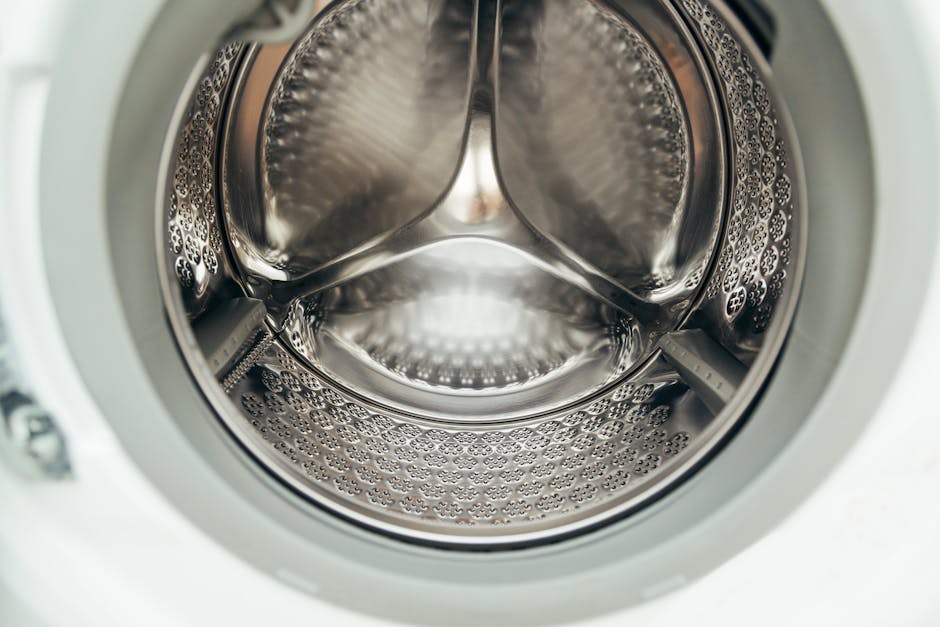
Tuesday night, 11:14 PM. I was standing in two inches of gray, soapy water in my basement because my three-year-old “smart” front-loader decided to give up on life during a heavy load of bedding. I didn’t cry, but I wanted to. When you have three kids, a dog that sheds like it’s getting paid for it, and a husband who works in landscaping, a broken washing machine isn’t just an inconvenience. It’s a domestic emergency. The pile of dirty clothes doesn’t stop growing just because the pump motor died.
The $1,200 mistake I’ll never make again
I used to think that more features meant a better clean. I bought into the hype. I spent a month’s mortgage on a Samsung AddWash because it had a little door within a door and it sent notifications to my phone when the cycle was done. Total garbage. What I mean is—actually, let me put it differently: it was a fragile piece of tech masquerading as a tool. The motherboard fried twice in three years. The rubber gasket grew a ecosystem of black mold despite me leaving the door open. When the technician finally told me the “spider arm” had snapped and it would cost $700 to fix, I realized I’d been played.
I know people will disagree with this, and the eco-conscious crowd will probably come for my throat, but front-loaders are a scam for large families. They are slow, they smell like a damp basement, and they can’t handle the sheer physics of five people’s worth of denim and towels. I don’t care about the water savings if I have to run the machine three times as often because the drum can’t actually tumble a full load of King-sized sheets without throwing an “unbalanced” error code. I’m done with them. Never again.
If the control panel looks like an iPad, don’t buy it. You’re just paying for more things that will break when your teenager inevitably slams the lid.
The ugly machine that actually works

After the Great Basement Flood, I did something I should have done years ago. I stopped looking at Best Buy and started looking at what laundromats use. That led me to the Speed Queen TC5. It is not pretty. It doesn’t have a glass lid so you can watch your clothes spin. It doesn’t have a “steam sanitize” cycle that takes three hours. It looks like something your grandmother bought in 1984. It’s a top-loader with a real agitator that actually moves the water through the fabric instead of just gently wiggling it.
I tested this thing. I mean, I really tracked it. I did a “Towel Test” where I crammed 18 full-sized bath towels into one load. On my old LG front-loader, that cycle took 78 minutes and the towels came out slightly damp and smelling like old pennies. The Speed Queen finished the same load in 28 minutes. Twenty-eight. I can do three loads in the time it takes a modern “high-efficiency” machine to do one. For a large family, speed is the only metric that matters. If you can’t clear the hamper before dinner, you’ve already lost the war.
It’s loud, though. The spin cycle sounds like a Boeing 747 taking off in my mudroom. I don’t care. I’ll take the noise over the silence of a dead motherboard any day.
A brief rant about detergent pods
I might be wrong about this, but I’m convinced detergent pods are the reason half these machines fail anyway. They don’t always dissolve properly in cold water. I found a blue, gelatinous glob stuck to the sleeve of my favorite sweater last month and I nearly lost my mind. Plus, you can’t control the dose. If you have a small load, you’re using too much soap, which builds up in the outer tub and starts the whole mold cycle. Just use the liquid stuff. Or powder. Just stop using the pods. Anyway, back to the hardware.
The specs that actually matter
When you’re shopping, ignore the “Total Capacity” numbers they put on the stickers. They measure that in cubic feet, but a 5.0 cu. ft. front loader can’t actually wash 5.0 cu. ft. of clothes without straining the motor. Look for these things instead:
- A manual override: You want to be able to tell the machine to use more water. “Deep Fill” is a godsend for muddy sports uniforms.
- A transmission made of metal: Most modern machines use plastic gears. They strip. Speed Queen uses a metal transmission. It’s heavy as hell, but it lasts.
- A 5-year parts and labor warranty: If a company won’t stand by their machine for at least five years, they know it’s a disposable appliance.
I used to think I was being smart by saving $400 on a Maytag or a GE. I was completely wrong. I was just prepaying for a repairman to visit my house two years later. I’ve had the TC5 for fourteen months now and it hasn’t hiccuped once. Not once. It just eats whatever I throw in it—dog beds, muddy jeans, the works.
I know $1,300 is a lot for a top-loader that looks like a box of salt. It feels wrong to pay more for fewer features. But when you have four loads of laundry staring you down on a Sunday night, you don’t need a machine that can tweet. You need a machine that finishes the job before the kids go to bed.
Buy the Speed Queen. Or maybe the Maytag Commercial (the MVWP586GW model, specifically), though I’ve heard the newer ones aren’t quite as beefy as they used to be. Just stay away from the touchscreens.
Honestly, I still wonder if I’m just becoming my father, obsessed with “how they used to make things.” But then I look at my empty laundry basket and I realize I don’t care. I just want my weekends back.