RC Drift Cars Under $40: What the Reviews Actually Tell You
Budget RC drift cars sit in a frustrating price bracket — cheap enough to impulse-buy, expensive enough to sting when the product doesn’t match the marketing. This guide covers what actually matters before you spend $25 to $35 on either of the two leading options in this range.
This is not financial advice. Prices are current as of 2026 and subject to change.
What Actually Makes a Drift Car Different from a Regular RC Car
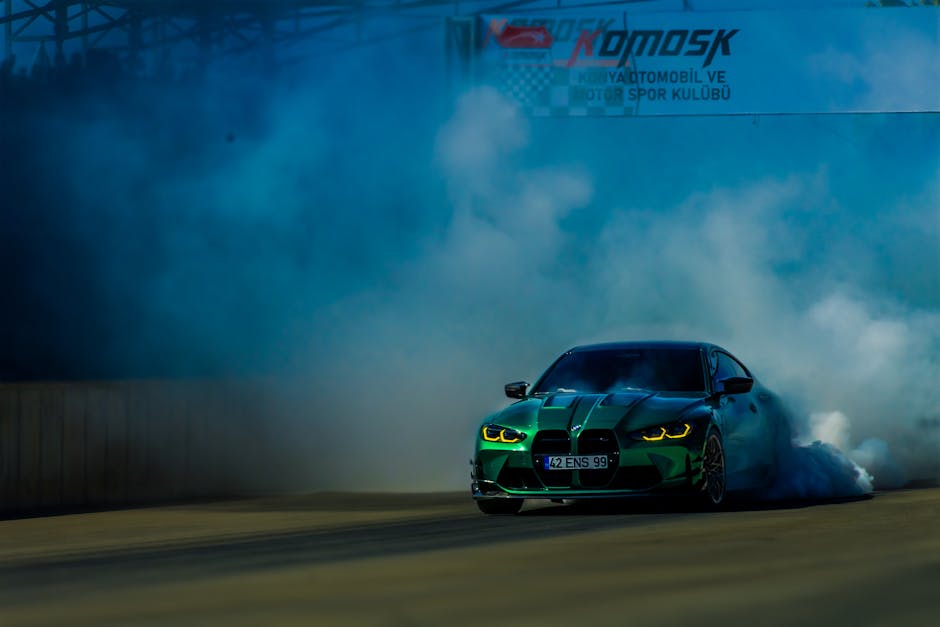
Drifting is about controlled oversteer. A regular RC car grips the surface and goes straight. A drift car deliberately slides its rear end outward — and lets the driver steer through that slide with coordinated throttle and steering input.
The physics are simple. Drift tires (harder plastic or low-tread rubber) reduce rear grip compared to normal tires. When you apply throttle on a low-grip surface, the rear wheels lose traction and break loose. The car slides sideways. You countersteer — turn opposite to the slide direction — and manage the angle with throttle. That’s drifting in three sentences.
Most budget drift cars include two tire sets: hard plastic drift tires for smooth indoor surfaces and softer treaded tires for outdoor use. Swapping takes about 90 seconds with a small screwdriver. Both tire types serve a real purpose — don’t assume drift tires are always the right call for every surface.
Hobby-Grade vs Toy-Grade: A Real Price Divide
Hobby-grade RC drift cars start around $150–200 from brands like Traxxas, Yokomo, and HPI Racing. These run brushless motors, aluminum chassis components, adjustable suspension geometry, and have deep aftermarket support. Yokomo’s YD-2 series is a dedicated competition drift platform with genuine race credentials. Traxxas’s drift-capable Slash 4X4 retails for around $350 — more than 10x the budget tier. The gap in performance is real, but so is the gap in durability requirements and repair costs.
Toy-grade cars under $50 are a completely different product class. Brushed motors. Plastic chassis. 2.4GHz radio with roughly 30 meters of effective range. Top speeds of 15–20 km/h. No meaningful aftermarket support — when parts break, you typically replace the car.
Neither is wrong. They serve different needs. A toy-grade car at $35 is reasonable for learning countersteering technique indoors without financial risk. It’s unreasonable only if you expect hobby-grade durability and performance from it — that expectation mismatch is where most disappointment comes from in this category.
Why the Under-$40 Tier Works for Beginners Specifically
Learning RC drifting involves crashing. A lot. Walls, furniture legs, and anything else in the room are all obstacles during early sessions. In the toy-grade RC bracket, crash survivability often matters more than peak speed.
A car that absorbs repeated low-speed impacts and keeps running is worth more to a beginner than a faster car that needs repair after every wall contact. That’s the practical case for starting in the $25–35 range before committing to a $150+ hobby-grade platform. You spend cheap, you find out if you enjoy it, and then you decide whether to invest more.
Six Steps to Actually Drift an RC Car Starting from Zero
Most beginner guides bury the most important step: surface selection. Get the floor wrong and drift tires become almost pointless — not technique, not throttle feel, just the wrong surface entirely.
- Pick a smooth, hard indoor surface. Linoleum, hardwood, polished concrete — these work with drift tires. Carpet creates too much grip even with slick rubber. Your kitchen floor is a better drift surface than most outdoor spaces for first sessions.
- Install drift tires before your first run. Cars in this price bracket ship with both tire sets. Running drift tires on carpet or rough outdoor pavement just wears them out without teaching anything. Match tire type to surface before powering on.
- Fully charge both battery packs first. Short per-charge runtime is a known limitation in this category. Beginning with a partial charge cuts an already-limited session even shorter. Charge both batteries completely before the first run.
- Use controlled throttle bursts, not full speed. Full throttle on slick tires from a standstill creates random spin-out, not intentional drift. 50–70% throttle lets you feel where grip transitions to slide — that threshold is the exact thing you’re learning to control.
- Learn countersteering from session one. When the rear slides right, turn right — opposite to most instincts. This takes 15–20 minutes of intentional practice to internalize. It’s the single skill that separates drivers who can drift from drivers who spin out constantly.
- Practice figure-8s before anything else. Figure-8 patterns force you to initiate drifts in both directions and chain the transitions together. It’s more useful than straight-line speed runs and gives real, immediate feedback about throttle and steering accuracy.
Three mistakes that kill most first sessions: running drift tires on carpet, starting with partially charged batteries, and trying to drift at full throttle before finding the grip threshold. All three are avoidable with 60 seconds of setup before the transmitter powers on.
RACENT 1:20 vs RACENT 1:24: Direct Specs Comparison

Both models come from RACENT. The spec sheet differences are modest. The purchase-confidence difference is not.
| Spec | RACENT 1:20 RC Drift Car | RACENT 1:24 Mini RC Drift Car |
|---|---|---|
| Price | $34.99 | $24.49 |
| Advertised Scale | 1:20 | 1:24 |
| Actual Scale (per buyers) | Closer to 1:24 | Accurate to claim |
| Top Speed | 20 km/h | ~16 km/h (10 mph) |
| Drive System | 4WD | 4WD |
| Radio Frequency | 2.4GHz | 2.4GHz |
| LED Lights | Yes | Yes |
| Batteries Included | 2 rechargeable | 2 rechargeable |
| Tire Types | Racing + Drift | Racing + Drift |
| Amazon Rating | 4.3/5 (13 reviews) | 4.2/5 (141 reviews) |
The RACENT 1:20 at $34.99 is marginally faster and costs $10.50 more. The meaningful gap isn’t top speed — it’s review confidence. 141 verified reviews on the 1:24 versus 13 on the 1:20 is a significant data difference. A 13-review rating can shift considerably with another dozen purchases in either direction. A 141-review rating at 4.2 has stabilized.
Bottom Line: If raw top speed is the priority, the 1:20 is the pick. If you want a more proven product with a deeper buyer dataset and accurate scale claim, the 1:24 wins — and costs $10.50 less to find out.
The Scale Accuracy Problem Nobody Flags on the Product Page
The RACENT 1:20 model’s advertised scale doesn’t match the actual car. A verified buyer stated it directly: “the scale is incorrect. It’s more like a 1/24 scale.” At least one buyer returned the product specifically over this discrepancy.
If scale accuracy matters for your purchase — display purposes, matching an existing die-cast collection, gift context where the specific size was requested — the 1:20 fails that test. The RACENT 1:24 accurately matches its advertised scale. Factor this in before deciding the $10.50 premium on the larger model is justified.
Battery Life, Build Quality, and the Screwdriver You Should Replace Immediately
The dual-battery setup is a genuine feature. But the numbers behind it require realistic expectations going in.
Actual Runtime Per Charge
Budget brushed RC cars at $25–35 typically deliver 15–25 minutes of active drive time per battery pack. With two packs, total session time before both need recharging is 30–50 minutes. That’s a solid indoor practice session — enough for meaningful skill development — but not continuous hours of use.
One buyer put it plainly: “Battery dies quickly.” This is a category reality, not a defect. Small battery packs have limited energy density. The dual-battery inclusion is RACENT’s acknowledgment of this — it doubles usable time before the first charging break. If extended runtime becomes a priority after purchase, check compatibility with third-party battery packs of matching voltage and connector type before buying anything aftermarket. Not all budget RC cars accept direct-swap replacements.
Build Quality Under Repeated Crashes
The flexible plastic chassis on both RACENT models handles impact better than it looks. Flexible plastics bend and absorb energy rather than cracking on direct wall contact. At 16–20 km/h, crashes involve manageable energy levels. One verified buyer confirmed the 1:20 specifically: “he crashed it a lot and it held up great.” That result tracks with the flexible-chassis approach common across budget RC products in this tier.
The durability concern in this category is not crash impact. It’s maintenance access.
Replace the Included Screwdriver Before You Need It
The bundled screwdriver for tire swaps and battery bay access is a documented weak point. One verified buyer reported directly: “the screwdriver included for parts broke in half easily.” This pattern repeats across budget RC products — the primary vehicle meets its performance spec, the bundled maintenance hardware often does not.
Buy a precision screwdriver set before your first session — Wiha, Husky, or any hardware store equivalent runs $6–10. A broken screwdriver mid-session, after setup time and a fully charged battery, is an avoidable frustration with a straightforward fix.
Which Model to Buy Based on Your Actual Situation
Buying this as a gift for a child under 10?
The 1:24 at $24.49 is the clear call. The lower speed ceiling (10 mph vs 12+ mph) is appropriate for younger users. The lower price reduces the sting if the car gets lost, stepped on, or abused through heavy play. Verified buyer feedback specifically mentions child use — “he had so much fun” appears among real buyer comments. Nothing in the 1:20’s spec sheet at $10.50 more provides meaningful benefit for a child drifting around a living room floor.
Buying for an adult or older teenager who wants the fastest option in this range?
Start with the 1:24 mini at $24.49 as the entry point regardless. If the speed ceiling genuinely feels limiting after real use, that’s useful data — it signals readiness for a hobby-grade platform like the Traxxas Slash or a Yokomo YD-2 entry model. Spending $25 to confirm you enjoy RC drifting before committing $150–200 is the financially rational approach. Most buyers who jump straight to hobby-grade as their first car regret not having a cheaper car to crash during the learning phase.
Does the $10.50 price gap justify choosing the 1:20 over the 1:24?
Only if two conditions are true simultaneously: you want the top speed in this price tier, and the scale inaccuracy doesn’t matter to you. If both conditions hold, the 1:20 is a defensible purchase. If scale accuracy matters at all — display, collection context, specific size expectations — the 1:24 is the more honest product. It delivers exactly what it claims, at a lower price, with a far larger review pool behind it.
What 141 Reviews Actually Confirm About This Budget Category
The RACENT 1:24 is the default recommendation for most buyers — and the review volume makes that a specific verdict, not a vague one.
141 reviews at 4.2/5 is a stable, meaningful dataset for a sub-$25 RC car. The 1:20’s 13 reviews at 4.3/5 could shift considerably with another dozen purchases. The 1:24’s rating has been tested by enough buyers across enough conditions to be reliable information.
Consistent praise themes across verified buyer reports:
- Drift control accessibility: Multiple buyers noted that drift initiation feels natural even for first-timers. One reviewer confirmed: “it is so easy to drift and worth every penny.” The 4WD system on both models creates predictable rear-end slide behavior that beginners can manage within the first session rather than the first hour.
- Post-crash durability: Reviewers specifically flagged crash resilience as a positive, not just an absence of a complaint. The flexible chassis construction handles repeated low-speed impacts better than the car’s appearance suggests it should.
- Dual-battery value: Buyers consistently treated the second battery as a genuine session extender, not a marketing checkbox. “It’s fast, battery life is nice” appears in the verified review data, indicating the dual-battery setup lands as intended for most users.
The documented limitations — short per-charge runtime, scale inaccuracy on the 1:20 model, fragile included screwdriver — are all manageable with realistic expectations and a $7 screwdriver set from a hardware store. None are dealbreakers. All are worth knowing before you open the box.
At $34.99, the RACENT 1:20 with dual batteries and LED lighting performs within the expectations of its price bracket — but for most buyers, the 1:24 at $24.49 is the starting point that makes financial sense: proven by more buyers, accurately scaled, and $10.50 cheaper going in.
Match the tire type to your surface, and you will be drifting consistently within 20 minutes of unboxing — that’s the single thing that matters most on day one.
Disclaimer: The information on this page is for educational purposes only and does not constitute financial advice. Rates, terms, and eligibility requirements are subject to change. Always compare multiple lenders and consult a licensed financial advisor before borrowing.