Desk Decor Accessories Under $20: What’s Worth Buying
Are you trying to make your desk look like it belongs to someone intentional — without spending $200 on an aesthetic haul?
The sub-$20 desk accessory market is full of products that photograph beautifully and disappoint in person. Bad build quality. Tangled strings. Physics toys that work for two weeks and then sit inert. Most buyer guides skip the actual specs and just list products with vague descriptions like “perfect for stress relief” — without explaining what makes one option actually work and another fail.
This guide covers two products at $17.99 each, a direct comparison against competing options, and a framework for building a better desk without overspending. One product is a clear buy. The other is strongly situational.
What to Look For in a Newton’s Cradle Before You Buy
Newton’s Cradles have sat on executive desks since the 1960s. The physics is simple: suspend a row of steel balls, pull one back, release it — kinetic energy transfers through the stationary balls and launches the far ball outward with equal force. The motion continues for 30 to 90 seconds depending on build quality.
That’s the principle. The buyer reality is blunter: most Newton’s Cradles under $15 fail within weeks. The base tips over during swings. The strings tangle on day two. The balls are hollow, dent from repeated contact, and once dented, energy transfer degrades — swings shorten, motion becomes uneven, and the cradle slowly stops working altogether. You end up with an inert desk ornament instead of a functioning physics gadget.
Here are the specific specs that separate a Newton’s Cradle worth owning from one headed for a desk drawer:
Base Weight and Material: The Make-or-Break Factor
The base carries the entire cradle structure. If it’s too light, you feel the unit shift slightly with each ball swing — which is distracting and defeats the calming, hypnotic quality the thing is supposed to deliver. The practical stability threshold on a hard desk surface is around 1.5 lbs (680g). Below that, expect noticeable rocking during use.
Material is a real and underappreciated distinction. Chrome-plated plastic looks nearly identical to solid wood or brushed metal in product photos. Handle one in person and the difference is immediate: plastic flexes when you press the frame, scratches easily, and reads as cheap from arm’s length. Solid wood doesn’t flex, resists light surface wear, and develops a natural patina over time — it looks better with age rather than worse.
The benchmark to look for: 1.75 lbs (794g) minimum with a solid wood base. That extra weight over a lighter plastic-base alternative is felt during operation — the unit stays completely stationary rather than rocking with each swing cycle. It sounds like a small detail. It isn’t.
Ball Size and Construction: Why Hollow Steel Fails
Ball diameter directly affects momentum and swing duration. Larger balls carry more kinetic energy per cycle, which means longer, more visually satisfying swings. Most budget cradles use 1-inch (25mm) diameter balls. Better options in this price range use balls in the 1.5-inch range — the difference in swing arc and visual impact is immediately apparent.
Hollow steel balls are the most common cost-cutting measure in cheap Newton’s Cradles. The balls strike each other hundreds of times per minute during operation. Hollow balls dent from this repeated contact. Once dented, the contact point shifts from a perfect spherical surface to an irregular one — energy transfer becomes inefficient, swings shorten, and the cradle that once ran for 60 seconds now dies in 15. This degradation happens within weeks of regular use, not months.
Solid steel balls maintain their contact geometry indefinitely under normal use. They don’t dent. This spec is invisible at purchase time but becomes the primary factor determining whether someone keeps or discards a Newton’s Cradle after the first month of ownership.
String Design: The Most Common Failure Mode
Tangled strings are the single most common complaint in one-star Newton’s Cradle reviews. Pull up any poorly rated listing and the pattern repeats: “strings tangled on first use,” “impossible to untangle without breaking alignment,” “stopped working after three days because the strings wrapped together.”
The structural fix is two-point string attachment per ball. When each ball hangs from a single string, it can rotate freely and drift sideways during swings. Two anchor points per ball — separated at the top of the frame — create a constrained parallelogram swing path that prevents lateral drift entirely. This is what tangle-free design actually means in practice. It’s not a premium feature — it’s a basic engineering fix for the most predictable failure in this product category.
DIY assembly kits serve a different but equally important purpose. Pre-assembled cradles often arrive with uneven string tension — one ball sitting 2-3mm lower than the others, causing irregular contact and imperfect energy transfer. When you string it yourself, you control the tension on each ball independently and verify alignment before first use. Ten minutes of setup versus a return shipping process. The math is obvious.
Any cradle listing that doesn’t mention tangle-free suspension or include an assembly option is likely cutting corners on this exact feature. Treat its absence as a red flag, not an irrelevant spec.
Newton’s Cradle vs. Other Desk Stress Toys: Side-by-Side
Before buying any desk stress toy, it’s worth seeing how the options actually compare across the specs that matter in a real workspace:
| Product Type | Example Product | Price | Noise Level | Desk Footprint | Longevity | Best Use Case |
|---|---|---|---|---|---|---|
| Newton’s Cradle (quality build) | Sealive Solid Wood Base | $17.99 | Medium (click) | 6–8 inches | 5+ years | Visual desk anchor, office decor |
| Kinetic Sand | Spin Master Kinetic Sand | $15–$20 | Silent | Large (messy) | 2–3 years | Tactile sensory play, not desk use |
| Magnetic Zen Garden | ICNBUYS Magnetic Zen Garden | $20–$30 | Silent | Medium | 3–5 years | Quiet offices, open-mic calls |
| Fidget Cube | Zuru Antsy Labs Fidget Cube | $8–$15 | Low (soft clicks) | Minimal (handheld) | 1–2 years | Active hand fidgeting during calls |
| Liquid Motion Bubbler | Toysmith Liquid Motion Bubbler | $8–$12 | Silent | Small (display piece) | 5+ years | Passive visual calming, no interaction |
The Newton’s Cradle wins on visual impact and longevity at this price point. Nothing else on this list looks like office decor. Everything else reads as a toy or a sensory tool. A quality cradle with a solid wood base carries an aesthetic weight that holds up next to desk accessories costing two or three times more.
The one genuine trade-off is noise. The Sealive Newton’s Cradle produces a clear ball-click that’s audible in a quiet room and will register on an open microphone. If you’re on back-to-back calls with an open mic all day, the ICNBUYS Magnetic Zen Garden is the smarter call — slightly more expensive, but completely silent during use.
Kinetic Sand looks compelling in product videos but fails on a working desk. Sand escapes the container. Within a week it migrates into your keyboard and under your mouse. For any desk with electronics on it, the mess factor rules it out regardless of how calming the texture feels.
The Zuru Antsy Labs Fidget Cube ($8–$15) is a different tool for a different need. It’s not decor — it’s something to do with your hands during a long call. If you need to fidget more than you need to display, it wins on that specific use case and takes up almost no desk space at all.
The Sealive Newton’s Cradle: A Clear Verdict

For a working desk under $20, this is the Newton’s Cradle to buy.
The 1.75 lb solid wood base, large solid steel balls, and tangle-free DIY assembly kit hit every spec that matters at this price. With 97 reviews and a 4.0/5 rating, the feedback is consistent: buyers report stable build quality, a working tangle-free assembly, and a finished product that looks noticeably better than the $17.99 price tag suggests. You can order it for $17.99 here and have it assembled in ten minutes — the DIY process is a feature, not an inconvenience, because it lets you set string tension yourself and verify alignment before first use.
Skip it if your workspace is silent and you’re on open-microphone calls for more than four hours daily. The click is the one meaningful trade-off, and it’s worth knowing before buying rather than after.
Who Should Buy the 22-Piece Plush Finger Puppet Set (And Who Shouldn’t)
The 22-piece plush finger puppet set hits the same $17.99 price point with a 4.4/5 rating from 895 reviews. That review volume matters: 895 buyers giving something 4.4 stars is a statistically reliable signal, not a lucky batch. This product consistently delivers what the listing shows.
These are miniature stuffed animal puppets designed to fit over adult fingertips — soft plush construction, 22 characters per set, built for interactive storytelling, sensory play, and fine motor engagement. Here’s exactly who this purchase makes sense for:
- Parents with children aged 3–8. Twenty-two characters in one set gives you a full cast for improvised stories without buying multiple packs. Children who disengage during reading often re-engage immediately when a puppet starts talking directly to them. The variety makes this set a one-purchase storytelling toolkit.
- Therapists and educators working with autistic children. Soft textures support sensory engagement without overwhelming. The small size is non-threatening and easy to handle. Putting puppets on and off fingers also builds fine motor skills and grip coordination — occupational therapists use similar props specifically for these therapeutic goals.
- Early childhood educators. At under $0.82 per puppet, these are effectively consumable. You can let children use them freely in a classroom setting without worrying about damage to expensive materials. For group settings, 22 puppets stretch further than a 6-piece premium set at twice the cost.
- Parents who need a portable, screen-free activity kit. All 22 puppets fit in a small zip-lock bag. No batteries, no charging, no screens. For restaurants, waiting rooms, or long travel days with young children, the full 22-piece set is a $17.99 answer to hours of open-ended, imaginative activity.
Who should skip it:
- Anyone wanting desk decor. These are toys. On a working desk, they create visual noise unless you’re deliberately building an eclectic, maximalist aesthetic on purpose — in which case, go for it, but know what you’re buying.
- Buyers who need species-specific animal assortments. The 22 puppets are a random mix — you don’t control which animals are included. For curriculum-specific needs (farm animals only, ocean theme only), the Melissa & Doug Farm Finger Puppet Set ($14.99, 8 pieces) or the Learning Resources Puppet sets give you controlled selection by category.
- Anyone expecting indefinite heavy-use durability. Plush toys at this price handle normal play well, but repeated machine washing and daily rotation through multiple children over years will wear them down faster than hard-plastic alternatives. They’re consumable at $0.82 each — plan accordingly.
At under $0.82 per puppet with consistent quality confirmed by nearly 900 buyers, the value is real when the use case actually fits.
How to Budget a Desk Refresh for Under $40
The most common desk refresh mistake: buying too many disconnected pieces.
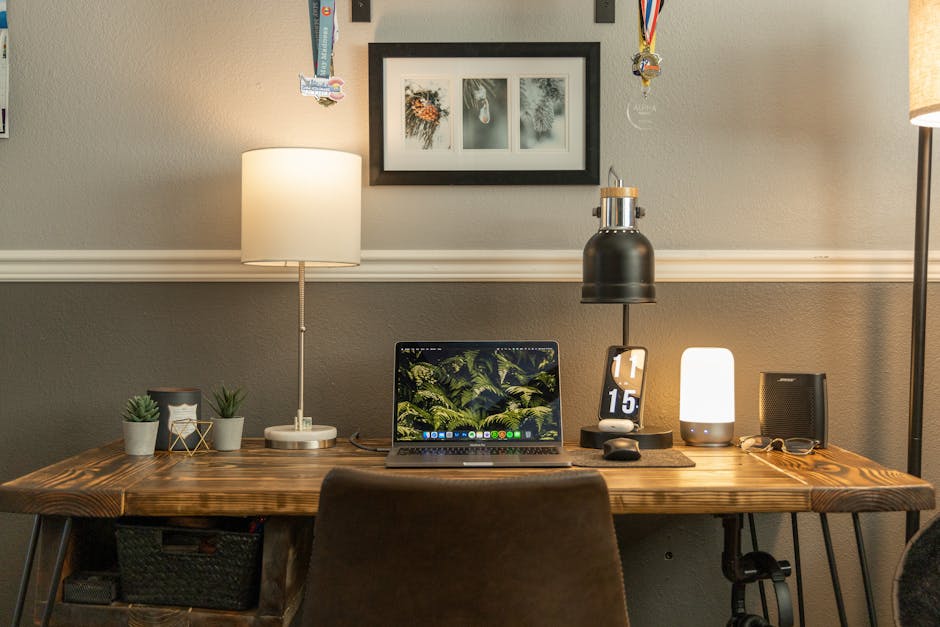
Five unrelated figurines and three mismatched pen holders don’t produce a curated workspace — they produce a cluttered one. The principle that actually works here comes from interior design: one anchor, one layer, one accent. Three intentional elements look better than ten random ones, every single time. Adding cable management as a foundation step before any of the above multiplies the visual effect of everything you put on the surface.
Here’s a concrete budget breakdown that produces a real visual result:
| Role | What to Buy | Approx. Cost | Why It Matters |
|---|---|---|---|
| Anchor (kinetic or sculptural piece) | Newton’s Cradle with solid wood base | $17–$18 | One bold, functional object with visual presence and staying power |
| Layer (surface unifier) | Extended desk mat, 90x40cm minimum | $12–$16 | Makes all desk items look intentional rather than randomly placed |
| Accent (organic texture) | Small succulent or air plant | $3–$6 | Breaks up tech monotony with natural contrast and warmth |
| Foundation (cable management) | Clip-based cable system (e.g., IKEA FIXA) | $4–$6 | Removes the clutter that undermines everything placed above it |
| Total | $36–$46 |
Start with cable management — not the decorative pieces. Visible cable tangles behind a monitor or underneath a keyboard will undermine any purchase you make above them. A $4–$6 cable clip system installed in 15 minutes has a larger visual impact than any single desk accessory you could buy. This step first, always, before spending a dollar on anything decorative.
The extended desk mat is the second highest-leverage purchase in this budget. A 90x40cm mat transforms a desk from a collection of unrelated objects sitting on wood into a composed surface where everything belongs. Products in the $12–$16 range from brands like JSVER or Ktrio come in neutral colors that unify rather than compete with desk items — the effect is subtle and significant at the same time.
The anchor piece carries the most personality. A Newton’s Cradle with a solid wood base works specifically because it’s functional (it does something) and decorative (it looks good doing it). A decorative figurine is only decorative — it has no use, and the eye registers it as clutter faster than you’d expect.
If the total budget is strictly $20, skip the mat, succulent, and cables, and put everything into a single strong anchor piece. One well-chosen kinetic desk accessory makes more visible difference than five small decorative items split across the same budget.
Disclaimer: The information on this page is for educational purposes only and does not constitute financial advice. Rates, terms, and eligibility requirements are subject to change. Always compare multiple lenders and consult a licensed financial advisor before borrowing.