Cutting Board Buying Mistakes That Cost You Money (And What to Get Instead)
I’ve gone through four cutting boards in ten years. Two warped within a year, one cracked down the middle, and one stained so badly no amount of bleach fixed it. The board I’ve used for the past three years — a walnut end-grain board — still looks close to new. The difference wasn’t luck. It was buying the right type of board from the start.
Why End-Grain Construction Is Worth Paying For
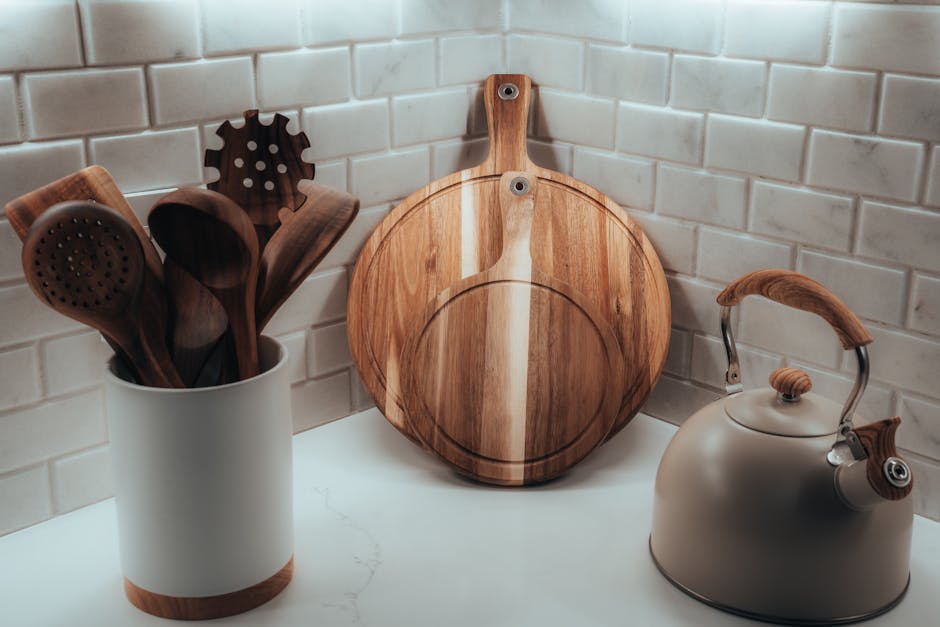
Most people treat all wood cutting boards as roughly equivalent. They see “wood” and assume it’s a category, not a spectrum. But the way a board is cut from the tree changes everything about how it performs — and how long it lasts.
Edge-grain boards expose the long face of the wood. Think of looking at a plank from the side. When a knife hits that surface, it cuts directly across the wood fibers. Over months and years, you get deep grooves, score marks, and a surface that dulls your knife edges faster than it should.
End-grain boards expose the cross-section of the wood fibers — the rings you’d see if you cut straight through a log. The knife slips between the fibers rather than across them. After the blade passes, the fibers spring back into position. That’s not marketing language. It’s basic wood mechanics, and it’s why John Boos has sold end-grain boards at $150–$250 for decades without a shortage of buyers.
Wood Species and Why Walnut Is the Sweet Spot
Not all wood species perform equally, and this choice matters more than most buyers realize.
Walnut sits around 1010 on the Janka hardness scale — hard enough to resist scoring, soft enough not to damage knife edges with every stroke. It’s naturally dark, resistant to moisture absorption compared to lighter woods, and has a tight grain structure that doesn’t harbor bacteria the way open-grain woods do.
Hard maple (1450 Janka) is the industry standard for commercial butcher blocks. John Boos and Boos Blocks use it almost exclusively. Harder than walnut, lighter in color, more durable long-term. The tradeoff: that extra hardness puts slightly more wear on knife edges over time. Fine for professionals who sharpen constantly. Less ideal for a home cook who sharpens twice a year.
Teak contains natural oils that make it highly water-resistant, but those same oils interfere with mineral oil conditioning. It also runs high on hardness, which means accelerated blade wear. Teak is beautiful on a patio. It doesn’t belong as a daily knife board.
Walnut is the sweet spot for home kitchens — premium aesthetics, knife-friendly hardness, and natural moisture resistance. It’s why most high-end home boards trend toward walnut rather than maple.
Does End-Grain Actually Self-Heal?
The “self-healing” claim is real but overstated. End-grain boards don’t erase cuts — visible knife marks accumulate over years of use. What’s accurate is that minor surface marks appear less prominent on end-grain than edge-grain, because the wood fibers swell slightly when the board is oiled and re-hydrated. After three years of daily cooking, a well-maintained end-grain walnut board looks dramatically better than a three-year-old edge-grain board with identical usage. That’s a real difference, not a selling point invented by a copywriter.
Walnut vs. Bamboo vs. Plastic: What the Numbers Actually Show
Here’s a straight comparison. Pick the material that matches your actual use case, not the one that looks best in a kitchen photo.
| Material | Janka Hardness | Knife Impact | Lifespan | Maintenance | Best Use | Price Range |
|---|---|---|---|---|---|---|
| End-grain walnut | 1,010 | Low — knives stay sharp | 8–15 years | Oil monthly | Daily meal prep + serving | $40–$120 |
| Edge-grain maple | 1,450 | Medium | 5–10 years | Oil monthly | Budget-conscious wood option | $25–$70 |
| Bamboo | ~1,380 | High — dulls blades fast | 2–5 years | Occasional oiling | Charcuterie, serving boards | $15–$40 |
| Plastic (HDPE) | N/A | Low | 1–3 years | Dishwasher-safe | Raw meat and fish only | $10–$30 |
| Acacia | ~1,700 | High | 3–6 years | Regular oiling | Decorative serving | $20–$60 |
Bamboo gets marketed as the eco-conscious, knife-safe alternative. The eco part holds up — bamboo is a fast-growing grass. The knife-safe part doesn’t. Bamboo’s Janka hardness rivals hard maple. It will dull a chef’s knife faster than walnut will. If you want bamboo, use it for a dedicated serving board where knife contact is minimal. The THETCHRY Checkered Bamboo at $26.99 fits exactly that role — sized at 16.5″ x 11″, it’s right for cheese, cured meats, and crackers at a dinner party, not for breaking down a whole chicken. That’s not a criticism; it’s just the right use case.
Plastic gets dismissed as cheap and inferior, but it has a legitimate job: raw meat and fish. No wood board, regardless of how much you paid for it, should be your only prep surface for chicken or seafood. Keep a separate OXO Good Grips utility board ($10–$15) specifically for that purpose. Cross-contamination is a real risk that beautiful wood grain can’t mitigate.
The Features That Actually Matter (With Real Specs)

Marketing copy for cutting boards is full of vague language about “craftsmanship” and “natural beauty.” Here’s what to actually evaluate before buying.
Board Size — Go Bigger Than You Think You Need
The most common mistake: buying a board that’s too small. You need room for the ingredient you’re actively cutting AND space to push it aside as you work. A 12″ x 8″ board is fine for garlic and herbs. For real meal prep — a butternut squash, a whole chicken, a large head of cabbage — you need at least 16″ x 12″, and bigger is genuinely better. The THETCHRY Walnut runs 17″ on the long edge. That’s the correct size for a primary prep board. Boards under 14″ start to feel cramped the moment you’re doing anything more than slicing fruit.
Weight matters too. A light board slides. A heavy board stays put. End-grain walnut boards at 17″ run 5–8 lbs depending on thickness. That heft is a feature, not a flaw.
Design Details That Affect Daily Performance
A juice groove shallower than 3/8″ deep is decorative, not functional. You want something that actually catches the runoff from a resting steak or a sliced watermelon before it hits your counter. Most product photos make grooves look deeper than they are — check the spec sheet, not the listing photos.
Anti-slip feet are a safety feature, not an afterthought. A board that slides under a chef’s knife is genuinely dangerous. Some boards use 3M rubber corner dots; others use full rubber strips. The dots work well when new but occasionally lose adhesion over time. One verified buyer specifically called the anti-slip pieces out as feeling low quality. The fix is simple and works better than any foot: a damp dish towel underneath. Takes two seconds and eliminates sliding entirely.
Handle design matters more for serving boards than prep boards. A handle that sticks out past the board edge lets you grip and carry without touching the food surface — useful when you’re moving from counter to table. The THETCHRY Walnut has this, which is part of why it transitions cleanly between prep and serving without needing a separate platter.
What Comes in the Box
The THETCHRY Walnut ($46.99) ships with a beeswax conditioning paste and an applicator brush. That’s more significant than it sounds. Wood conditioner runs $8–$15 separately — Howard’s Butcher Block Conditioner costs around $9 — and most first-time wood board buyers forget to buy it entirely. One reviewer described the included product as offering “beeswax paste and a brush to restore and shine the natural texture of the wood, non-greasy deep nourishing.” Having that in the box means you start maintaining the board correctly from day one instead of wondering why it dried out after three months.
The dual-sided design gives you one side for active chopping and one for serving. That’s a single board doing two jobs without looking like a battered prep surface when guests are around. The gift box packaging is also why this board keeps appearing in housewarming and wedding gift searches — it arrives presentation-ready without extra work.
What Goes Wrong — The Questions Buyers Ask After the Fact
Why Did My Board Arrive With a Crack?
Cracking on arrival is almost always a moisture issue — the board dried out during transit, and dry wood joints under stress can split. It’s not exclusive to budget boards; I’ve seen it reported on John Boos boards too. Two THETCHRY Walnut buyers reported this. One wrote: “The cutting board arrived with a crack, but the seller’s customer service was absolutely exceptional.” If this happens to you, photograph it immediately before using the board, and contact the seller the same day. Don’t wait a week and don’t try to use a structurally cracked board.
Why Are the Edges Rough Right Out of the Box?
This is a common issue with end-grain boards specifically — not a brand defect. The manufacturing process involves gluing dozens of wood pieces together at specific angles, and the edges don’t always receive as much finish attention as the flat surfaces. One reviewer described it plainly: “every single edge needs sanding.”
The fix takes 15 minutes. Run 220-grit sandpaper along every edge and corner until smooth. Then apply mineral oil or beeswax immediately — sanded wood absorbs conditioner especially well, so you’re doing two maintenance tasks at once. Treat this as standard unboxing procedure for any wood board, regardless of brand.
Why Does the Color Look Darker Than the Photos?
Walnut is naturally dark. Product photography under bright studio lights makes it appear slightly lighter and warmer-toned than it is in person. One buyer who ordered the light color option wrote: “when I opened it it seemed much darker than the photo for walnut.” This is accurate walnut color, not a defect. If you want a lighter-toned board, look at hard maple from Boos Blocks or a cherry wood option — cherry starts light and deepens to a warm reddish-brown over time.
How to Make a Wood Cutting Board Last More Than a Decade
Wood boards fail for one reason almost every time: they dry out. Dry wood cracks, warps, and splits at the glue joints. Keeping a board properly conditioned takes about 20 minutes every couple of months. Here’s the exact process:
- Wash with warm water and mild dish soap only. Never soak the board, and never put it in the dishwasher. Heat combined with extended water exposure will warp any wood board — this rule has no exceptions.
- Dry it standing on its edge. Laying it flat traps moisture on the underside and promotes warping. Stand it upright so both surfaces dry evenly. Give it at least an hour before moving to the next step.
- Apply food-grade mineral oil. Not olive oil. Not coconut oil. Not vegetable oil. Plant-based oils go rancid inside the wood within weeks and create a smell you cannot remove. Food-grade mineral oil, available at any pharmacy for under $5, doesn’t go rancid. Pour generously onto the surface, rub it in with a cloth, let it sit 20–30 minutes, then wipe off the excess. Repeat two or three times when a board is new.
- Seal it with board cream or beeswax. Beeswax conditioner locks the oil in and adds a light protective layer across the surface. Work it in with your hands or a brush. Buff lightly with a clean cloth when done.
- Establish a maintenance rhythm. Oil every month for the first three months, then every few months after that. You’ll know when the board needs attention — the surface starts to look dull and parched rather than rich and hydrated.
- Resurface when grooves accumulate. Deep knife marks after years of use can be sanded out. Start with 120-grit to level the surface, finish with 220-grit for smoothness, then restart the oiling process from scratch. A quality end-grain walnut board can be resurfaced two or three times over its lifetime — effectively making it indefinitely usable.
This process applies to every wood board, from a $25 acacia serving board to a $200 professional butcher block. Skip it and boards fail within two years. Do it consistently and a good walnut board outlasts most kitchen appliances.
My Verdict on the THETCHRY Walnut at $46.99
One verified buyer summed it up better than I can: “Shocked at the price/quality as these go for way more.”
At $46.99, this board competes with options priced at $80–$120. The included beeswax and brush eliminate the most common first-time wood board mistake. The 17″ length is the correct size for actual meal prep. The end-grain walnut construction is legitimate — not decorative. Sand the edges when it arrives, oil it before first use, and contact the seller immediately if it shows up cracked.
For daily prep work on a budget under $50, this is the walnut end-grain board I’d buy over anything else at this price point.
Disclaimer: The information on this page is for educational purposes only and does not constitute financial advice. Rates, terms, and eligibility requirements are subject to change. Always compare multiple lenders and consult a licensed financial advisor before borrowing.