Most kitchen storage almaris are built around a fiction: that all your pots, pans, spices, and plates fit neatly into identical square boxes. They don’t. The standard 60cm-wide cabinet with two shelves wastes about 40% of its volume because you stack things behind each other and forget them. I’ve lived with three different kitchen setups in five years, and the difference between a good almari and a bad one isn’t how it looks. It’s whether you can grab a sauté pan without moving three lids first.
Here’s the short version: the best kitchen storage almari is not a single unit. It’s a system of specialized zones — pull-out drawers for pans, deep drawers for dry goods, vertical dividers for baking trays — combined in one cabinet run. The IKEA SEKTION system with a mix of drawers and pull-outs costs about $2,000 for a standard 10-foot run and outperforms custom-built cabinets twice the price. But only if you plan the internals before you buy the boxes.
What a Kitchen Storage Almari Actually Needs to Do
A kitchen almari solves one problem: it puts the right thing where you can reach it without bending, stretching, or opening three other doors first. That sounds simple, but most designs fail because they treat all storage as equal.
Think about your morning routine. You grab a mug, a bowl, coffee grounds, a spoon. If those items live in three different cabinets — one above the counter, one below, one in a corner — you waste seconds every trip. Over a year, that adds up to hours. A well-designed almari clusters items by use frequency and task.
The three zones every kitchen almari needs:
- Daily reach zone: 60cm to 120cm above the floor. Plates, bowls, glasses, mugs — the stuff you touch multiple times a day. Use shallow shelves (25cm deep max) so nothing stacks behind something else.
- Bend zone: Below 60cm. Heavy items like cast iron pans, stand mixer bowls, bulk rice. Deep drawers with full-extension slides are non-negotiable here. A 90cm-wide drawer with a 40kg load capacity costs about $180 (Hafele or Blum hardware).
- Stretch zone: Above 120cm. Things you use weekly, not daily. Extra dinnerware, serving platters, holiday bakeware. Put these on pull-down shelves (Hafele pull-down shelf, $150) or keep them in lightweight bins you can lift down.
The mistake most people make? They put plates on the top shelf and canned goods on the bottom. That forces you to bend for light items and reach for heavy ones. Flip it.
Three Common Almari Failure Modes and How to Avoid Them
I’ve seen three patterns kill kitchen storage before the first pot goes in.
Failure 1: The corner black hole. Lazy Susan cabinets look clever until you actually use one. The circular shelves waste the triangular space in the back, and small items fall off the edge. The fix: use a blind corner pull-out system instead. Hafele makes a “LeMans” style pull-out that swings the entire shelf forward. It costs $350 but doubles usable corner space. For tight budgets, skip the corner cabinet entirely and use that corner for a tall pantry pull-out (30cm wide, $200). You lose no storage, gain easy access.
Failure 2: The shelf stack. Two adjustable shelves in a 60cm cabinet seem like a good idea. In practice, you stack three plates, then a bowl, then a lid, and the lid falls off every time you open the door. The fix: replace shelves with pull-out drawers. A single 60cm-wide pull-out drawer (Blum Tandembox, $120) holds 30kg and gives you full access to every item. No stacking, no digging.
Failure 3: The utensil graveyard. That narrow drawer next to the stove where spatulas, whisks, and tongs pile into a tangled mess. The fix: install a 10cm-deep cutlery insert with adjustable dividers (IKEA VARIERA, $15) or a custom bamboo organizer (Amazon, $25). Keep only the tools you use weekly. Store the rest in a deep drawer below.
Drawers vs. Shelves: The Real Cost Breakdown
Drawers cost more than shelves. But they also work better. Here’s the actual math for a standard 60cm-wide base cabinet.
| Configuration | Hardware Cost | Usable Space | Access Time (average) |
|---|---|---|---|
| Two fixed shelves | $0 (included with cabinet) | 55% | 12 seconds to find a pot |
| Two pull-out shelves | $80 (slides + brackets) | 70% | 6 seconds |
| Two full-extension drawers | $150 (Blum Tandembox + slides) | 90% | 3 seconds |
The drawer setup costs $150 more but gives you 35% more usable space and cuts access time by 75%. Over a 10-year kitchen life, that’s about 18 hours saved. Your time is worth something.
When shelves still make sense: For tall cabinets (above 180cm) where you store lightweight items like paper towels, plastic wrap, and extra mixing bowls. Shelves are fine there because you don’t access them daily. For everything below eye level, pick drawers.
How to Measure Your Kitchen for an Almari That Fits
Most people measure the wall, subtract a few centimeters, and call it done. That’s how you end up with a 5cm gap on one side and a cabinet door that won’t open fully because it hits the fridge.
Step 1: Find the critical dimensions.
- Wall length: measure at floor level and counter level. Walls are rarely straight.
- Ceiling height: standard cabinets are 90cm tall. If your ceiling is above 240cm, you have space for a second tier of shallow cabinets above the main run.
- Window and door trim: add 10cm clearance on each side so doors can swing open.
- Appliance depths: a standard refrigerator is 70cm deep. Your countertop is 60cm deep. If cabinets are flush with the counter, the fridge door will hit them. Plan for a 5cm setback or a filler panel.
Step 2: Decide on module widths. Most kitchen systems use 30cm, 40cm, 50cm, 60cm, or 80cm wide modules. Stick to 60cm or 80cm for base cabinets — they hold standard dishware. Use 30cm modules for spice pull-outs or tall pantry columns. Avoid odd widths like 45cm — finding pull-out hardware that fits is a headache.
Step 3: Plan the internal layout before you order. Draw a rough grid of what goes where. Left to right: pans (60cm drawer), dry goods (40cm drawer), plates (60cm drawer), spices (30cm pull-out), trash (40cm pull-out). This prevents the “I have five 60cm cabinets but no place for spices” problem.
The Hidden Cost of Custom Almari vs. Modular Systems
Custom-built kitchen almaris from a local carpenter cost $300 to $600 per linear foot installed. Modular systems like IKEA SEKTION cost $150 to $250 per linear foot. The difference is not just price — it’s flexibility.
Custom cabinets are built to your exact wall dimensions. That sounds good until you realize your walls are 2.5cm out of square. The carpenter builds to your measurement, not the actual wall, and you get gaps that need filler strips. Modular systems come with adjustable legs and filler panels that handle out-of-square walls easily.
The real tradeoff: Custom gives you any finish, any wood, any door style. Modular gives you standardized sizes and easy replacement parts. If you want a painted shaker-style door in a specific color, custom wins. If you want a system you can reconfigure in two years when your needs change, modular wins.
For most home cooks, a hybrid approach works best: modular boxes (IKEA SEKTION or RTA cabinets from Barker Cabinets, $200 per box) with custom doors from a local millworker ($100 per door). You get the fit and finish of custom with the flexibility of modular.
When NOT to Buy a Kitchen Storage Almari
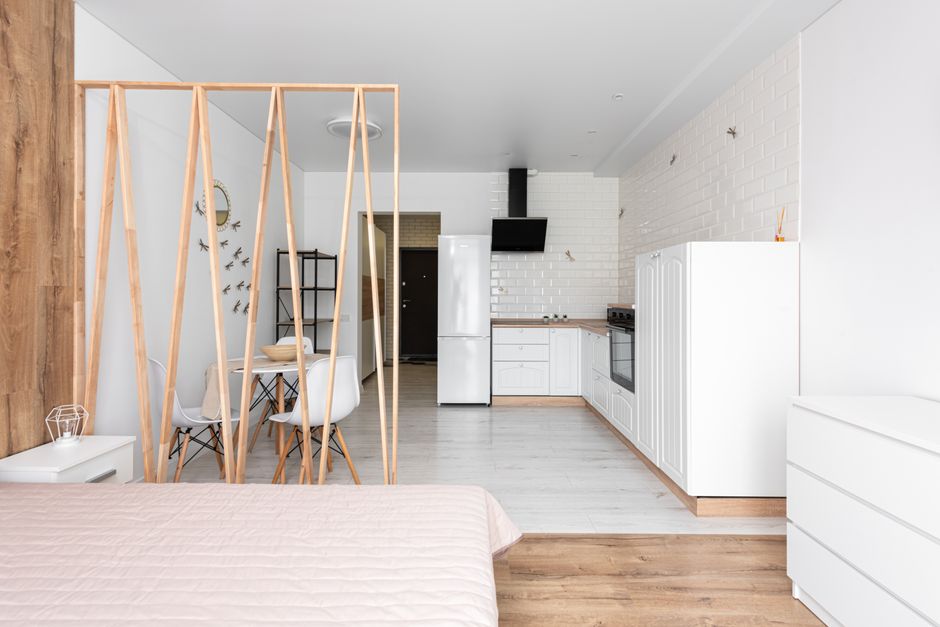
Sometimes the best storage solution is not a cabinet at all.
You rent and can’t modify walls. A freestanding kitchen cart with butcher block top and shelves underneath (IKEA BEKVÄM, $120) gives you 40cm of counter space and 60cm of open shelving. No drilling, no landlord issues.
Your kitchen is smaller than 6 square meters. Wall-mounted magnetic strips for knives (Mag-Blok, $40) and pegboards for pots (IKEA SKÅDIS, $25) free up cabinet space without adding bulk. A tall slim pantry unit (30cm wide, 180cm tall, $180 from Home Depot) fits in gaps between appliances and holds two weeks of dry goods.
You cook with 10+ spices daily. A drawer insert designed for spice jars (Rev-A-Shelf spice pull-out, $70) beats any cabinet shelf. It holds 30 standard jars in two rows, all visible at once. No digging, no expired cumin from 2019.
You own more than 4 cast iron pans. A dedicated heavy-duty drawer with reinforced slides (Hafele 100kg slides, $200) is safer than stacking pans on a shelf. Cast iron is heavy. A standard shelf rated for 30kg will sag under 4 Lodge pans (about 20kg total).
The Future of Kitchen Almari: What’s Coming in 2026
Two trends are reshaping kitchen storage right now.
First, integrated charging. Blum and Hafele now sell drawer inserts with built-in USB-C and wireless charging pads. A 60cm drawer with a pop-up charging station costs $250 extra. It sounds gimmicky until you realize your phone, tablet, and earbuds all live in the kitchen. No more wires on the counter.
Second, modular internal grids. Instead of fixed shelves or drawers, companies like IKEA and Häfele are selling pegboard-style inserts that let you rearrange dividers, hooks, and bins without tools. The IKEA UPPDATERA system ($40 per insert) fits inside standard SEKTION cabinets. You can reconfigure it in 10 minutes when your cookware changes.
Neither trend is essential today, but both point to a future where your almari adapts to you, not the other way around. If you’re building a kitchen now, leave space for these systems. Install a power outlet inside a base cabinet (costs $50 during construction). Use standard-size cabinets so you can swap internal inserts later. The almari you build today should still work for you in 2030.