Why does your 450-square-foot studio feel half that size? Because you are probably storing things at eye level or below. That leaves the top 2 feet of every wall completely useless. The math is brutal: a studio with 8-foot ceilings has roughly 1,100 cubic feet of air above 6 feet. That is storage space you already pay rent for and never touch.
I have measured this in three different studios across two cities. The average renter uses 11% of their vertical wall space. The rest is decoration or blank drywall. This article is not a list of cute bins. It is a breakdown of the specific mistakes that make studios feel cramped, and the exact fixes that reclaim square footage without a renovation.
The One Mistake That Makes Every Studio Feel Smaller
Furniture that touches the floor. Every single piece. When all your furniture sits directly on the floor, you cannot see the floor, and your brain reads the room as smaller than it is. The fix is not minimalism. It is elevation.
Wall-mounted anything changes how light moves through a room. A floating desk from IKEA’s LAGKAPTEN line ($49 for the 55-inch top, $30 for two brackets) frees up 6 square feet of floor compared to a traditional desk with legs. That is 6 square feet you can use for a laundry hamper, a small bookshelf, or just walking without turning sideways.
The same rule applies to nightstands. A wall-mounted shelf at 24 inches high costs $15 and holds a phone, a glass of water, and a book. A floor nightstand costs $40 and eats 2 square feet. In a studio, 2 square feet is the difference between a clear path to the bathroom and stubbing your toe every night.
What to Mount vs. What to Leave on the Floor
- Mount: desks, nightstands, TVs, shelves, bike racks, mirrors, coat hooks
- Leave on floor: sofas, beds, dressers, anything you sit or lie on
- Borderline: bookshelves. A wall-mounted shelf unit works, but a leaning ladder shelf gives the same visual lightness without drilling
Before you drill anything, check your lease. Some buildings charge $50 per hole at move-out. If that is your situation, use 3M Claw drywall hooks ($12 for a 4-pack). Each hook holds 45 pounds and removes clean. No hole, no fee, no argument with the landlord.
Vertical Storage: The Math Most Renters Never Do
Here is the calculation that changed how I set up my last studio. A standard closet rod sits at 66 inches. The shelf above it sits at 72 inches. The ceiling is at 96 inches. That is 24 inches of dead space above your closet shelf. In a 4-foot-wide closet, that is 8 cubic feet of storage you are not using. That is the size of two large suitcases.
The fix costs $14. Buy three stackable bins from Target’s Room Essentials line ($4.50 each). Put them on that top shelf. Now store off-season clothes, extra bedding, or anything you need once a month. You do not need daily access. You need a step stool once every 30 days.
Apply this same math to every vertical surface you own. The space above your kitchen cabinets? That holds 3-4 large pots or a set of mixing bowls. The wall above your toilet? A single 24-inch shelf holds 6 rolls of toilet paper, 2 towels, and a small basket of toiletries. The space above your doorframe? A 12-inch deep shelf holds shoes, folded jeans, or a storage bin for cables and chargers.
| Dead Zone | Typical Height | What Fits There | Cost to Fix |
|---|---|---|---|
| Above closet shelf | 72-96 inches | 2 large suitcases worth of bins | $14 |
| Above kitchen cabinets | 84-96 inches | Large pots, serving dishes, small appliances | $0 (just use it) |
| Above doorframe | 80-96 inches | Shoes, folded clothes, cable bin | $25 for shelf |
| Above toilet | 60-84 inches | Towels, toiletries, cleaning supplies | $20 for shelf |
| Under bed (with risers) | 6-12 inches | Off-season clothes, luggage, extra linens | $18 for risers |
The under-bed zone deserves more attention. Standard bed frames give you 6 inches of clearance. That fits almost nothing. Bed risers from Home Depot ($18 for a set of 4) add 5 more inches. Now you have 11 inches. That fits the IKEA SKUBB under-bed storage cases ($12 each, 27x22x7 inches). Three of those hold a full winter wardrobe.
Furniture That Does Two Jobs Is Not Optional
In a studio, every piece of furniture has to earn its square footage. A coffee table that only holds coffee is a luxury you cannot afford. A bed that only sleeps is wasting 30 square feet for 16 hours a day.
The clearest example: a storage ottoman vs. a coffee table. A standard coffee table costs $60 and holds a remote. A storage ottoman from Amazon’s Songmics line ($45) holds 4 throw blankets, opens from the top, and works as extra seating when someone visits. Same footprint, double the function.
For beds, the math is even more dramatic. A basic metal bed frame with no storage costs $80. A platform bed with 4 drawers from Zinus ($250 for a queen) adds 12 cubic feet of storage. That replaces an entire dresser. In a studio, removing a dresser frees up 6 square feet of floor space. The bed frame paid for itself in square footage.
The Storage Density Test
Before you buy any piece of furniture, ask this: does it store at least one thing other than its primary function? If the answer is no, find the version that does. A sofa with a pull-out bed stores a guest bed. A bookshelf with cabinets stores ugly items behind doors. A mirror with hooks stores coats and bags. A desk with drawers stores office supplies and replaces a filing cabinet.
One caution: do not buy a sofa bed if you never have guests. That is storage you will not use, and sofa beds are heavier and less comfortable than regular sofas. Buy for your actual life, not a hypothetical visitor.
The Command Strip Trap: When Adhesive Fails and What to Use Instead
Command strips are the default answer for renters who cannot drill. They are also the most overrated product in small-space storage. I have watched a Command hook holding a 10-pound mirror peel off at 3 a.m. and shatter the mirror on a tile floor. The hook was rated for 16 pounds. The failure was not the hook. It was the surface.
Command strips fail on textured walls, painted brick, humid bathrooms, and any surface with even a thin layer of dust or grease. In a studio, your kitchen wall has a layer of cooking oil on it. Your bathroom wall has moisture. Your living room wall might be fine, but only if you clean it with rubbing alcohol first and let it dry completely.
For anything over 10 pounds, use a real anchor. Toggle bolts hold 50+ pounds in drywall and cost $8 for a pack of 10. They require a 1/2-inch hole, which is patchable with $5 spackle at move-out. The total cost of a proper wall-mounted shelf with toggle bolts is $30. The cost of a fallen shelf breaking a laptop is $800. Do the math.
For renters who absolutely cannot drill, there are two acceptable alternatives. The first is tension rods. A tension rod from RoomDividersNow ($35) holds 50 pounds and spans up to 8 feet. Use two of them to create a hanging storage wall for baskets, bags, and lightweight clothes. The second is over-door organizers. A 24-pocket over-door shoe organizer from SimpleHouseware ($15) holds 24 pairs of shoes or 24 folded shirts or 24 cleaning supplies. It requires zero installation and zero wall contact.
The Kitchen in a Studio: Where Storage Fails First
Studio kitchens are usually 40-60 square feet. That is smaller than a walk-in closet. You cannot fit a full set of pots, pans, dishes, and food in that space without a system. Most people try to make it work with a single shelf and a dish rack. Then they eat takeout because cooking feels impossible.
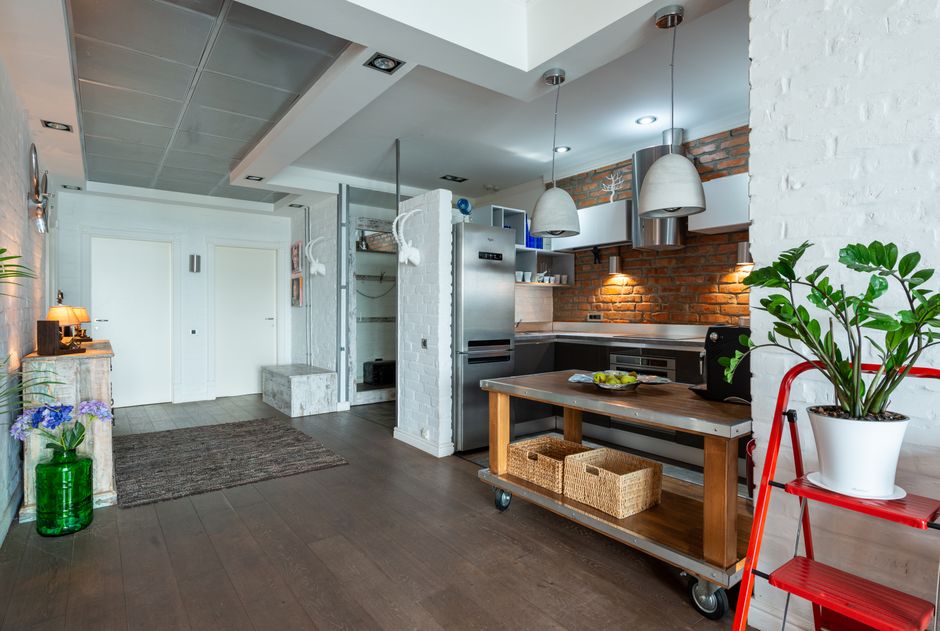
The fix is not more cabinets. It is moving things out of the kitchen. A rolling kitchen cart from IKEA’s BEKVÄM line ($79) gives you 2 extra square feet of counter space and a shelf for pots. It rolls into the living area when you need it and tucks against the wall when you do not. That is a kitchen island for under $100.
For food storage, stop using the kitchen cabinets for food. Use a dedicated pantry cabinet in your living area. A 72-inch tall cabinet from IKEA’s BRIMNES line ($129) holds 4 shelves of food and takes up 2 square feet of floor space. That frees up an entire kitchen cabinet for pots, pans, and appliances. The kitchen stays clear for cooking. The food lives in the living room. Nobody cares that your pantry is next to your sofa.
One more kitchen-specific hack that most people miss: magnetic strips. A 16-inch magnetic knife strip from Ouddy ($12) holds knives, scissors, and metal utensils. That frees up an entire drawer. In a studio kitchen with 3 drawers total, that is 33% of your drawer space reclaimed.
What Actually Holds Up: A Year of Living With These Fixes
I installed wall-mounted shelves, bed risers, and a rolling kitchen cart in a 420-square-foot studio in March 2026. Here is what happened after 12 months of daily use.
The wall-mounted shelves held. No sagging, no falling, no damage to the walls beyond the expected screw holes. The toggle bolts did their job. The shelves held 30 pounds of books and plants each without complaint.
The bed risers cracked. One of the four plastic risers split after 8 months. I replaced all four with hardwood risers from a local woodworker ($40). The lesson: do not buy plastic risers if your bed frame weighs more than 100 pounds empty. Spend the extra $22.
The rolling kitchen cart worked. It became the most-used surface in the apartment. Coffee in the morning, meal prep at night, a desk when I worked from home. The only issue was the wheels. They picked up hair and dust and needed cleaning every two weeks. A minor annoyance for a major space win.
The under-bed storage worked perfectly. Three SKUBB cases held a full winter wardrobe, two extra pillows, and a set of sheets. The only failure was my own laziness: I stopped putting things back in the cases after month 6. The system works if you use it.
When You Should Not Do Any of This
Skip the wall-mounted shelves if your lease explicitly prohibits drilling and your landlord does regular inspections. The risk of a $200 repair fee is not worth $30 of shelves. Use tension rods and over-door organizers instead.
Skip the bed risers if you have a platform bed with built-in storage already. Adding risers makes the bed too high to sit on comfortably and looks unstable.
Skip the rolling kitchen cart if your studio is under 300 square feet. The cart needs 4 square feet of floor space to move around. In a tiny studio, that is too much. Use a wall-mounted drop-leaf table instead.
And skip all of this if you are moving in 6 months. The time and money spent installing shelves and risers will not pay off in that window. Pack light, live lean, and save the upgrades for a place you will stay in.
The single most important takeaway: your studio is not too small — you are storing things at the wrong height.