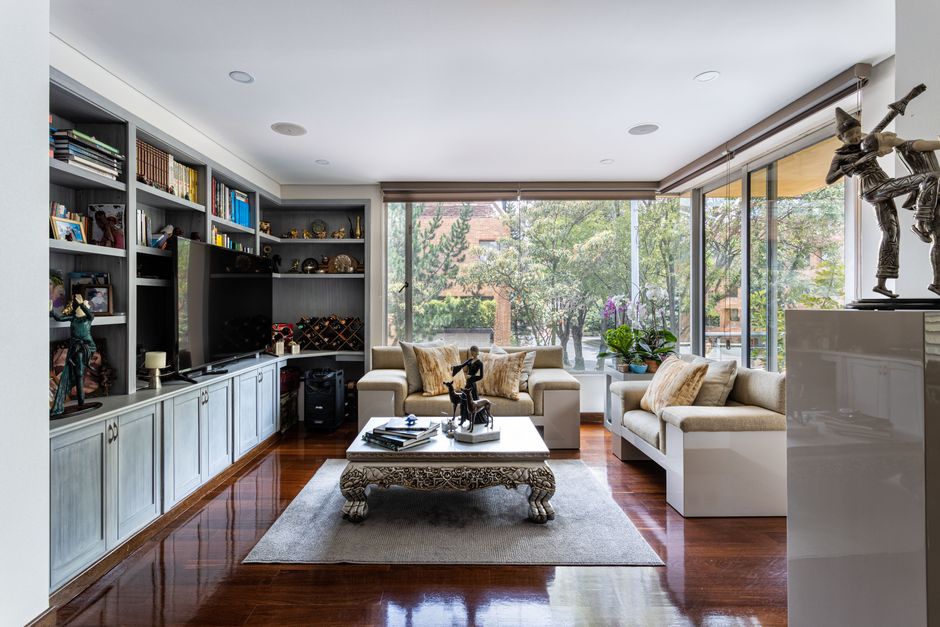
Large Wall Art for Living Rooms: 5 Choices That Actually Work
You’ve had that blank wall for six months. You know something needs to go there. Every time you browse, you either buy something too small — a mistake you only realize after hanging it — or you talk yourself into a gallery wall that requires seventeen trips to the hardware store and still looks like a Pinterest fail.
Here’s what consistently works: one large, confident piece of art. Not a cluster. Not a grid. One dominant statement above your sofa, console table, or bed. The rooms that actually read as “designed” almost always have this in common. These five decisions break down how to get there without wasting money on the wrong thing first.
Go Bigger Than Every Instinct Tells You
Most people buy art that’s too small. Not slightly too small — embarrassingly too small. A 24×36in canvas on a 10-foot wall doesn’t anchor anything. It floats. The wall wins, and the art looks like something that ended up there by accident.
This isn’t a matter of taste. It’s proportional math. Art needs enough visual weight to balance the furniture below it. If your sofa is 84 inches wide, your art should span at least 60-70% of that width. That’s 50-58 inches minimum. Most people buy 30-inch pieces and then spend six months wondering why the room feels like it’s missing something.
What “large” actually means for a standard living room
A standard 12×14ft living room handles art up to 60 inches wide without it feeling overwhelming. The 50-60 inch width is the standard designer sweet spot for rooms of that size. Push to 70+ inches if you have high ceilings or an open-concept layout where the visual space extends beyond the literal room boundary.
Height placement matters as much as width. Art above a sofa should have its center at eye level — roughly 57-60 inches from the floor. Leave 6-8 inches of breathing room between the top of the sofa back and the bottom of the frame. Less than that feels cramped. More than 10 inches and the art looks like it has escaped from the furniture entirely and is doing its own thing on the wall.
The two-thirds rule (and when to ignore it)
The classic guideline: art width should equal two-thirds of the furniture below it. For an 84-inch sofa, that’s 56 inches. Solid starting point. Not a law.
If your wall is particularly tall, lean wider. If you’re in a small apartment where an oversized piece might crowd the space, stick close to two-thirds and let the piece have vertical presence instead. The goal is proportion, not measurement compliance.
One thing that consistently holds: going slightly over two-thirds almost always looks better than going under. Err wide, not narrow. The most common regret people have is buying something too cautious.
Why gallery walls fail in most real homes
Gallery walls work in editorial photos because they’re styled by professionals with precision spacing tools, perfect lighting, and unlimited wall-patching resources after the shoot. In most real homes, they end up slightly crooked, inconsistently spaced, and visually noisy instead of curated.
More practically: a gallery wall is high-maintenance. Add one new frame and the whole arrangement is suddenly off. Move apartments and you’re patching 23 holes. One large canvas means one anchor point, one decision, one result you can evaluate immediately. The complexity-to-payoff ratio on gallery walls rarely holds up outside of editorial contexts. If you’re committed to a multi-piece approach, a set of two or three canvases designed to display together is far cleaner than assembling mismatched frames over months — at least then the proportions are already solved.
One Abstract Canvas That Earns Its Wall Space
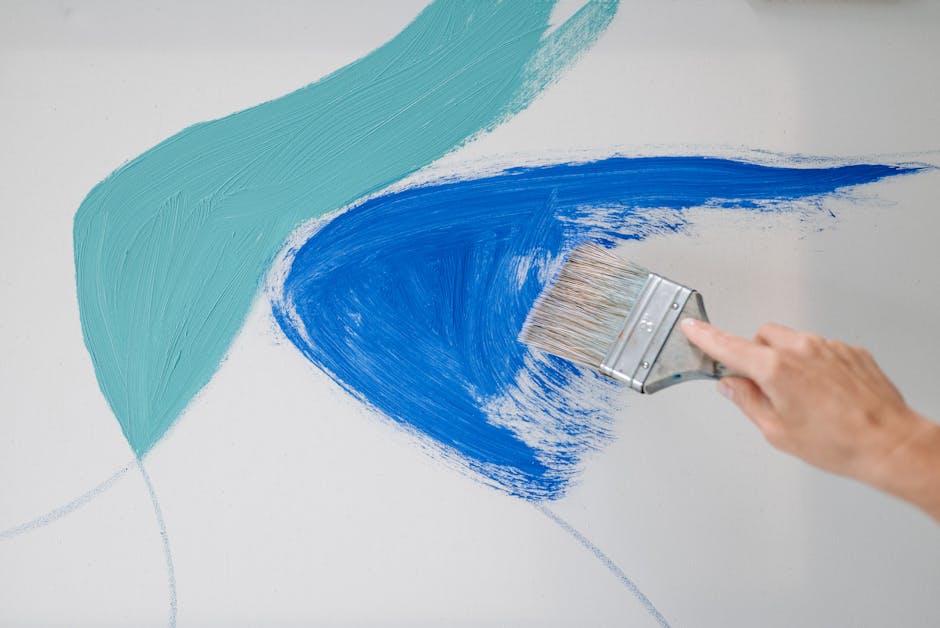
Most wall art in the $100-150 range looks exactly like it costs $100-150. Thin canvas, washed-out color, frames that bow in the center after a year on the wall. The Pogusmavi 58×29in Abstract Canvas at $139.90 clears that bar by enough to be worth looking at seriously.
At 4.6/5 from 748 reviews, the numbers track with the product. Fifty-eight inches wide puts it solidly in “actually fills a wall” territory. It ships stretched on a gallery-wrap wood frame and is ready to hang out of the box — no assembly, no separate framing costs.
What $139.90 gets you here
The canvas uses a gallery-wrap stretch over a wood frame — no visible staples on the front face, clean finished edges. The abstract color palette sits in the warm-to-neutral range, which is why it translates across interior styles. It reads as sharp and modern in a contemporary white room, and pulls warmer in a transitional space with wood tones and linen textures. The 58-inch horizontal span covers most standard sofas right at the two-thirds mark, which is why it doesn’t require any measuring gymnastics to make it work.
One flag based on the review pool: colors photograph slightly warmer than they appear in person. If you’re working with a cool-toned room — grays, charcoal, navy, crisp whites — the in-person piece may look different from the product photo. For warm rooms with cream, terracotta, walnut, or sage tones, it reads close to true.
Where this piece works best (and where it doesn’t)
Above an 84-inch sofa: ideal. Above a console table in an entryway with 9+ foot ceilings: strong. In a home office as a video call background: actually one of the better applications — abstract art reads as professional without being sterile or corporate, and the horizontal format fills a wall behind a desk cleanly.
Less effective in rooms under 120 square feet, where 58 inches starts to crowd the visual space, and in highly maximalist rooms where the piece competes with too much visual noise to land. The $140 price point makes this a lower-risk experiment than a $400 custom print. If it doesn’t click with your room, you haven’t torched your entire decorating budget on one call.
Stop Matching Art to Your Paint Color
The most common decorating mistake is also the easiest to fix. People pick wall art by matching the room’s dominant color — beige walls get beige art, gray sofa gets a gray painting. The result is a room that reads as “coordinated” in the blandest possible sense. Everything blends. Nothing stands out. The art disappears into the wall instead of working against it.
Art should contrast with its environment, not camouflage into it. That contrast is what makes a piece visible from across the room and creates the visual anchor you’re actually after.
Three variables that actually matter for placement
- Undertone, not literal color: Cool vs. warm is the relevant distinction, not specific hue. A navy abstract works in a warm cream room because the contrast reads as intentional. A warm ochre painting in a cool gray room does the same. Match the undertone relationship — not the color family.
- Scale to furniture, not to wall: The art’s size should be proportional to the furniture beneath it, not the empty wall around it. A 15-foot wall doesn’t automatically need a 70-inch canvas if the sofa below is only 60 inches wide. Size to the furniture grouping, not the surrounding void.
- Subject matter to room function: Abstract and geometric work in living rooms and offices. Botanicals, landscapes, and softer imagery read better in bedrooms and dining rooms. This isn’t rigid, but it’s a useful first filter when you’re overwhelmed and need to narrow the field fast.
The quick contrast test before you buy
Hold a paint chip of your wall color next to a screenshot of the art on your phone screen at normal brightness. If they look like they belong in the same family, push toward a different piece. The art should make the wall color pop by opposition, not match it by proximity. This test eliminates most bad online art purchases before they happen — and costs nothing beyond two minutes of your time.
Abstract vs. Farmhouse: Use This Table to Decide

Two styles dominate the large-canvas market right now: abstract contemporary and farmhouse/botanical. They work in different rooms for real reasons. Here’s the direct breakdown:
| Factor | Abstract Contemporary | Farmhouse / Botanical |
|---|---|---|
| Best room type | Living rooms, offices, lofts, open-plan spaces | Bedrooms, dining rooms, entryways, mudrooms |
| Interior styles | Modern, mid-century, eclectic, Scandinavian | Farmhouse, coastal, transitional, cottage |
| Best wall color match | Neutrals, bold accent walls, monochromatic schemes | Whites, creams, sage greens, warm beiges |
| Trend durability | Timeless in contemporary interiors | Farmhouse aesthetic cooling off post-2026 |
| Typical large format dimensions | Horizontal span, 50-70 inches wide | Vertical format, 30-40 inches wide × 50-60 inches tall |
| Quality canvas price range | $120-$200 | $100-$180 |
| Sample product | Pogusmavi Abstract, 58×29in — $139.90 | Pogusmavi Dandelion Farmhouse, 30×60in — $115.00 |
If your room skews warmer — shiplap accents, linen textures, natural wood furniture, woven baskets — the Pogusmavi Dandelion Farmhouse canvas at $115 is the stronger call. The 30×60 format runs taller than wide, which makes it particularly effective on narrow walls between windows or beside doorways where a horizontal span simply won’t fit. Both pieces carry the same 4.6-star rating from 748 reviews, which narrows the decision to pure style compatibility with your room rather than any meaningful quality difference between them.
Set a Hard Budget Before You Open a Browser

Wall art has the widest price range of any decorating category and the least obvious quality difference at the low end. A $40 canvas looks like $40. A $140 canvas can hold its own against $300 alternatives. That threshold isn’t intuitive from product photos, which is exactly why people waste money buying cheap art twice before landing on the piece they should have bought first.
What is the realistic quality floor for large canvas art?
For a statement piece 50 inches wide or larger, the quality floor is $100-120. Below that, you’re looking at canvas that warps within a year, ink that fades under direct light, and frames that lose their square. The 58-inch Pogusmavi abstract at $139.90 sits right at the entry point of the reliable quality tier — not premium, but not the canvas lottery either. In the $120-200 range, quality becomes predictable. Above $200 for a mass-produced print, you’re mostly paying for brand markup or specialty framing materials, not fundamentally better canvas or ink.
Is original art worth the price difference?
Yes — but only for specific reasons. Original work from local artists or platforms like Saatchi Art and Artfinder starts around $200-400 for large-format pieces. If you’re buying to support an artist whose work genuinely speaks to you, or as a long-term investment, original makes sense. If you’re solving a decorating problem in a rental, a quality canvas print at $140 is the practical answer and there’s nothing conflicted about it.
The cost-per-year math that changes how you shop
A $140 canvas you keep for 10 years costs $14 per year. A $45 canvas you replace every two years costs $22.50 per year and generates more waste. The math consistently favors spending $100-150 on a piece you actually want over buying budget art as a placeholder that never gets replaced. Most people cycle through two or three cheap pieces before buying the $140 piece they should have started with. Buy the thing you want once, place it correctly, and you’re done.
Bottom line by room and budget:
- Large living room, contemporary or modern style, neutral or cool-toned walls: Pogusmavi Abstract Canvas (58×29in, $139.90). Horizontal span covers standard sofas at the two-thirds mark; abstract palette adapts across lighting conditions throughout the day.
- Bedroom, entryway, or dining room with warm tones and farmhouse or transitional style: Pogusmavi Dandelion Farmhouse Canvas (30×60in, $115.00). Vertical format, softer botanical subject, $25 less, and particularly strong in tall narrow wall spaces.
- Small room under 120 sq ft on a strict budget: Neither at these dimensions. A 24×36in print in the $50-70 range, positioned correctly at the right height, does more for a small room than forcing oversized art into a space it can’t breathe in.
- Home office or video call background: Abstract wins outright. Farmhouse botanical reads too personal for professional contexts; abstract reads as intentional without pulling focus.
- DIY alternative when budget is the real constraint: IKEA’s PJÄTTERYD canvas panels ($30-50 each) in a two-panel horizontal arrangement can replicate large-format coverage. You won’t get the visual cohesion of a single piece, but the proportional coverage is there and individual panels can be swapped without replacing the full set.