You spent $8,000 converting a spare bedroom into a custom walk-in closet. It looks incredible. Your real estate agent is going to wince the second she walks in.
Not because the craftsmanship is bad. Because the moment that room stopped qualifying as a bedroom, your appraised value dropped — and most buyers will never mentally convert it back. This is the pattern that plays out across thousands of home sales every year: a design choice that felt like a personal upgrade turns into a line-item problem on the day the FOR SALE sign goes up.
Real estate agents, appraisers, and home stagers see these same mistakes repeatedly. Here’s what they actually flag.
Removing Bedrooms: The Renovation That Costs More Than It Saves
Bedroom count is one of the primary drivers of appraised value. Not square footage alone. Not curb appeal. Bedrooms.
In most U.S. markets, the gap between a 3-bedroom and 2-bedroom home sits between $15,000 and $35,000 at comparable square footage. That’s the cost of turning one bedroom into a home gym, a craft room, or — the most common culprit — a walk-in closet expansion. The Zillow Research Group has documented this pattern consistently: buyers search by bedroom count first, not by room quality. A stunning converted space often gets filtered out of search results entirely before anyone sees the photos.
What Qualifies as a Bedroom?
Requirements vary by jurisdiction, but the general standard is clear: a room needs a closet, a window, at least one egress point, and a minimum of 70–80 square feet of floor space. If you removed the closet to expand the room, that space no longer qualifies — regardless of how beautiful it looks or how you use it.
The Closet Expansion Trap
Breaking through into an adjacent bedroom to create a luxury walk-in closet is trending heavily on design platforms right now. It photographs well. Buyers in the abstract say they love it. But buyers who need 4 bedrooms won’t consider a 3-bedroom home — your renovation just eliminated an entire buyer segment before they scheduled a showing. If you’ve already done this conversion, a reversible solution (reinstalling a partition wall, adding a standard closet) before listing can recover meaningful value. A contractor can quote that job for under $2,000 in most markets.
When a Conversion Actually Makes Sense
Converting a bedroom works only if you’re not selling within 5–7 years, you’re in a market where bedroom count has low price variance (some dense urban condo markets), or the conversion genuinely adds more value than the bedroom did. That last scenario is rare. For the overwhelming majority of homeowners, keep the bedroom count intact until you list.
What Renovation ROI Actually Looks Like — Before You Start Tearing Down Walls
Before any major renovation, this is the table homeowners should study. These figures draw from the Remodeling Magazine Cost vs. Value Report and the National Association of Realtors (NAR) Remodeling Impact Report — two of the most cited benchmarks in the industry.
| Renovation Type | Average Cost | Resale Value Added | ROI | Verdict |
|---|---|---|---|---|
| Minor kitchen remodel (hardware, paint, appliance faces) | $26,000 | $18,200 | 70% | Acceptable |
| Major kitchen remodel (full gut, custom cabinets) | $77,000 | $45,000 | 58% | Risky |
| Mid-range bathroom remodel | $24,000 | $16,000 | 67% | Acceptable |
| Luxury bathroom remodel (heated floors, custom tile) | $76,000 | $36,000 | 47% | Avoid before listing |
| New steel front door (mid-range) | $2,000 | $1,900 | 94% | Do this |
| Bedroom conversion (gym, office, closet) | $8,000–$25,000 | Net negative ($15K–$35K loss) | Negative | Avoid completely |
| Inground pool installation | $55,000–$100,000 | $10,000–$40,000 | 20–40% | Avoid in cold climates |
| Garage conversion to living space | $20,000–$35,000 | Varies (often near zero) | 0–50% | Market-dependent risk |
The pattern is clear: the bigger and more personal the renovation, the worse the return. A $2,000 steel front door recoups 94 cents per dollar spent. A $77,000 kitchen remodel recoups 58 cents. Personalization costs money — and buyers don’t pay for your taste.
Bold Paint Colors and Wallpaper: Buyers Are Pricing In the Removal Cost
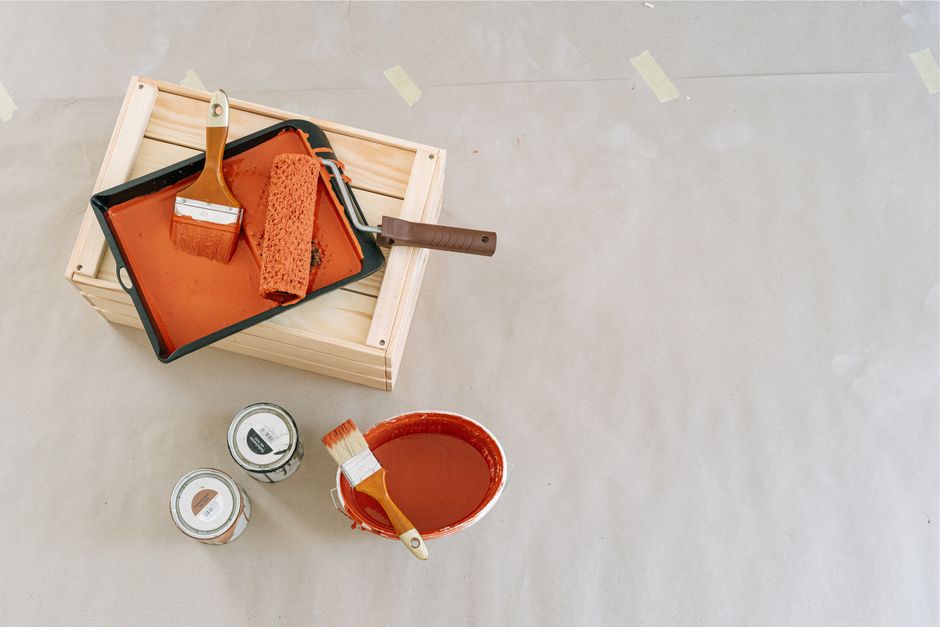
Dark accent walls and patterned wallpaper are not neutral choices — they are active deductions from your offer price. Buyers are not especially imaginative during home tours. They look at a deep forest green feature wall and mentally calculate how many coats of primer that takes to cover. They look at botanical wallpaper in the dining room and reach for their phones to Google removal costs mid-tour.
Professional wallpaper removal runs $1–$3 per square foot. For an average room, that’s $500–$1,500. For multiple rooms with layered paper bonded over drywall — a common scenario in homes built before 1990 — total costs can reach $3,000–$5,000. Buyers know these numbers. They subtract them from their offers before the negotiation even starts.
What the Zillow Color Data Actually Shows
Zillow analyzed over 32,000 photos of sold homes to identify which interior paint colors correlated with higher or lower final sale prices. The findings were specific. Homes with blue or soft periwinkle bathrooms sold for an average of $5,440 more than expected. Homes with yellow kitchens sold for $820 less. Terracotta living rooms averaged $793 under expected price. The data supports what agents have always said: warm, soft neutrals outperform bold choices at resale.
The specific colors that consistently hold value: Benjamin Moore Chantilly Lace (OC-17) for trim and ceilings, Sherwin-Williams Agreeable Gray (SW 7029) and Sherwin-Williams Accessible Beige (SW 7036) for main living areas. These aren’t exciting. That’s the entire point.
Wallpaper Is a Personal Choice With a Financial Consequence
Maximalist wallpaper had a real design revival starting around 2026. It still looks sharp in editorial photography. But editorial photography and the median homebuyer’s risk tolerance are entirely different things. A powder room with bold botanical wallpaper reads as distinctive to design people. To a buyer touring 12 homes on a Saturday afternoon, it reads as a project. Bedrooms carry lower risk. Main living areas, kitchens, and entryways are not the place to experiment if resale is within your planning horizon.
Why Hyper-Personalized Renovations Shrink Your Buyer Pool
There’s a version of home improvement that is purely about your enjoyment of the space you live in. That’s valid. And there’s a version that protects your investment. The costly mistake is confusing the two.
When you install a $15,000 custom home theater with a specific projector setup, acoustic wall panels, and blackout everything — you built something you love. But a buyer with three children and a completely different vision for that room sees $15,000 of demolition and reconfiguration work, not $15,000 of added value. The renovation has become part of the house without becoming universally useful. This is hyper-personalization in practice: spending money that moves a space toward one specific use case instead of remaining flexible for many.
The Staging Industry Exists for Exactly This Reason
Professional home stagers charge $300–$600 for a consultation and $2,000–$5,000 to stage a vacant property. They exist because the NAR found that staged homes sell 73% faster and for 5–10% more than comparable unstaged properties in the same market. Their entire value proposition is visual neutrality — showing buyers a canvas rather than a finished painting. When your underlying design is highly specific (unusual built-in configurations, polished concrete floors in a bedroom, industrial pipe shelving in a family home), staging can only do so much. The starting point is already complicated.
Design Trends Move Faster Than Ownership Timelines
A design trend that explodes on Instagram or TikTok reaches peak saturation in roughly 18 months. By month 30, design-aware people recognize it as dated. The average homeownership period before selling is 8–10 years. A trend you installed in year two of owning the home will look 6–8 years old when you list. Arched doorways, curved furniture, limewash walls, fluted wood cabinet fronts — all attractive right now, all carrying real risk of reading as their specific moment in time by the time most owners are ready to sell.
What Broad Appeal Actually Means in Practice
It doesn’t mean beige everything. It means choosing materials that a 35-year-old buyer, a 55-year-old buyer, and a first-time buyer could all see themselves living with comfortably. Hardwood floors over carpet. Quartz countertops over ultra-high-maintenance marble. Classic subway tile over large-format geometric patterns. The Kohler Artifacts faucet line and the Moen Arbor single-handle kitchen faucet both look current — and will still look current in a decade. That’s the product category that protects value: timeless over trending.
Pools in Cold Climates: The Math Doesn’t Work
In Phoenix or South Florida, an inground pool adds real, appraiser-recognized value. In Ohio, Minnesota, or anywhere with a five-month pool season, it almost certainly doesn’t. Installation runs $55,000–$100,000. Annual maintenance adds $1,200–$3,000. Many cold-climate buyers actively avoid properties with pools — liability concerns, child safety, winterization costs. Appraisers in northern markets frequently assign an inground pool a value of $10,000–$20,000 regardless of actual spend. That’s a $40,000–$80,000 gap between what you paid and what it’s worth on the appraisal report.
Six More Design Choices That Agents Flag at Every Listing Appointment

- Garage conversions to living space. Buyers in most suburban markets expect usable garage space for parking and storage. Converting it to a home gym or extra room removes utility that buyers assign real value to. Unpermitted conversions trigger disclosure requirements in most states — adding legal complexity to an already complicated sale.
- Carpet in bathrooms. Still present in homes from the 1970s and 1980s that haven’t been fully updated. Any buyer’s agent will put it on the repair request list immediately. Budget $800–$2,000 per bathroom for tile replacement if you’re inheriting this problem before a sale.
- Sunken living rooms or raised platform areas. A staple of mid-century design that now generates ADA accessibility concerns and tripping hazard liability questions in most buyers’ minds. Sellers consistently report difficulty marketing these features to general buyer pools, particularly in the move-up market.
- Commercial-grade appliances in mid-market homes. A Wolf 48-inch range ($10,000+) in a $320,000 home doesn’t make the home worth $330,000. Neighborhood comp ceilings cap your return. Buyers in that price range may not want to maintain commercial appliances — some actively prefer not to.
- Elaborate specialty landscaping. Koi ponds, tiered water features, highly maintained Japanese gardens. High-maintenance features read as ongoing work to most buyers, not as amenity. A clean lawn, healthy foundation planting, and trimmed trees consistently outperforms high-concept landscaping for resale return on investment.
- Fully open floor plans with no separation. Open concept dominated residential design for 15 years. The backlash is measurable now. Buyers with children, remote workers, and multi-generational households want separation between spaces. Removing every non-structural wall to create one large room has made some homes genuinely harder to market, especially in the $400,000–$700,000 segment where buyer profiles are diverse.
The consistent thread across all of these: when a design choice narrows who can comfortably use the space, it narrows who will make an offer. A smaller buyer pool produces less competition. Less competition produces lower final sale prices.
Run every major renovation through this filter before starting: does this make the home more useful to more people, or does it optimize specifically for one lifestyle? The first category protects your investment. The second is a personal choice — just go in understanding what the financial trade-off looks like before you break ground.