Minimalism has a reputation for being expensive. Scan any design blog and you will find $400 linen sofas, $200 ceramic vases, and advice to invest in quality. That framing misses the point entirely — and it misses what makes zen-inspired spaces actually work.
The core principle is subtraction, not substitution. You are not swapping cheap clutter for expensive clutter. You are figuring out what to remove, what to keep, and what small adjustments change how a room feels at a sensory level. That principle scales to any budget, including one under $300.
Why Most Minimalist Student Rooms Still Feel Chaotic
The mistake is treating minimalism as an aesthetic rather than a system. A student room with a white wall, a gray sofa, and fourteen small decorative items arranged on a shelf is not minimalist — it is neutral-colored clutter.
Real zen minimalism comes from three decisions made in a specific order:
- Color temperature before furniture. Warm, muted tones — cream, warm white, soft beige, muted sage — create psychological calm even in busy spaces. Cool grays and bright whites feel clinical and make mess more visible, not less.
- Clear surfaces before decor. Every surface that stays empty signals rest. Every surface with five objects on it signals unfinished work. Aim for at least 60 percent of horizontal surfaces to stay bare.
- Lighting before anything else. Overhead lights with cool-toned bulbs are the single biggest enemy of a zen atmosphere. Swap them for warm bulbs rated at 2700K, or add a floor lamp, before buying a single throw pillow.
Students almost always go in reverse — buying decor first, arranging furniture second, never touching the lighting. The result looks finished but feels wrong, and more purchases follow trying to correct it.
The Color Rule That Does Most of the Work
Pick one dominant neutral and hold it. Warm white or cream on walls (or just on linens if you cannot paint), one natural-material accent in wood or rattan, and one muted color that appears in two places maximum — a pillow and a small plant pot, for example. The reason this works is contrast reduction. When fewer tones compete for attention, the eye settles instead of scanning. That is why a well-executed minimalist room feels calm even when small.
The Non-Visual Components Most Students Ignore
Sound and smell matter more than most design guides admit. A visually clean room that smells stale and carries ambient street noise will not feel zen regardless of furniture choices. A small reed diffuser — H&M Home sells reliable ones for $12 to $15 — addresses the sensory layer that no sofa arrangement can fix. A $20 white noise machine or a basic Bluetooth speaker running ambient sound rounds it out.
Budget Breakdown: What to Spend On and What to Skip
Here is how a student working with $200 to $300 total should allocate across main categories, based on 2026 prices from IKEA, Target, and secondhand sources.
| Category | Recommended Budget | Best Source | What to Avoid |
|---|---|---|---|
| Lighting (floor lamp plus warm bulbs) | $55–75 | IKEA RANARP floor lamp ($49.99) | Cheap string lights — they add visual noise, not calm |
| Seating | $0–80 | Facebook Marketplace or Craigslist | New budget sofas under $300 — frames collapse within 18 months |
| Storage and shelving | $50–70 | IKEA KALLAX 2×2 unit ($69.99) | Open wire cube organizers — look chaotic regardless of what is in them |
| Textiles (throw, pillows) | $40–60 | H&M Home, Target Threshold line | Printed or patterned throws — too much visual contrast |
| Plants | $15–25 | IKEA FEJKA artificial series ($3.99–7.99) | Real plants if you travel frequently — a dying plant on a clean shelf defeats everything |
| Small accent pieces | $0–20 | Thrift stores or what you already own | Buying new accent items — this category should cost almost nothing |
The priority order in that table is not arbitrary. A student who puts $75 toward the IKEA RANARP and a pack of 2700K warm LED bulbs will see more visible impact than one who spends the same amount on three decorative objects. The seating row deserves specific attention: new sofas under $300 from Amazon or Wayfair have frames that fail under daily student use faster than almost any other furniture category. A solid-frame secondhand sofa in a neutral tone from Facebook Marketplace — $50 to $80 in most cities — cleaned with fabric spray and covered with a plain $20 Amazon linen-look fitted sofa cover, will outlast and outperform them without question.
The Purchase That Ruins Every Zen Room
Buying too many small things. This is where every student budget zen project collapses. The shelf with seven candles, four succulent pots, two picture frames, and a stack of books is not minimalist — it is a collection sorted by category. Pick three objects total for your entire living room surface space and put everything else in a closet. If it cannot live out of sight without bothering you, you own too much of it.
Furniture That Actually Works in Student Living Rooms
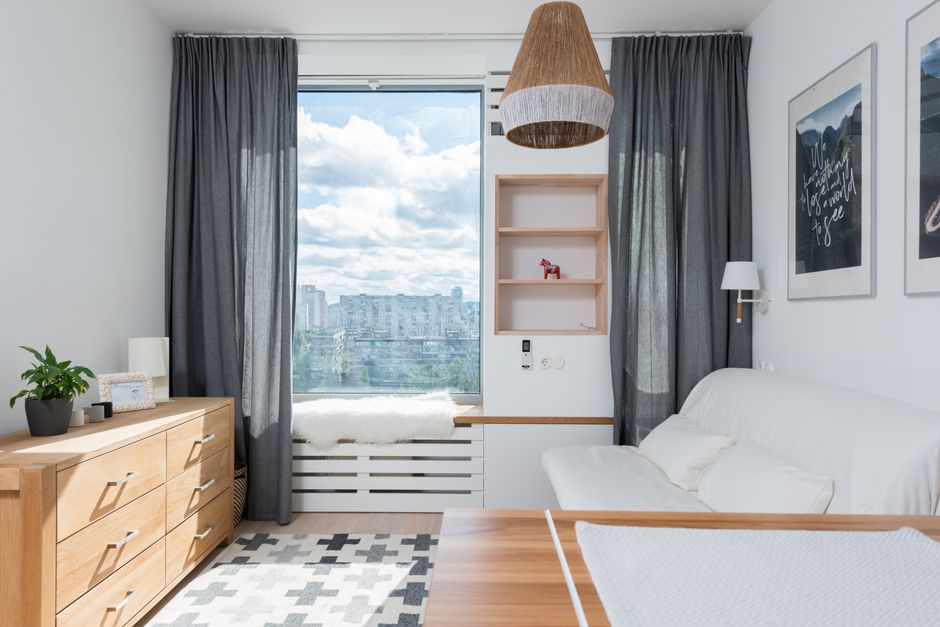
Student rooms carry two consistent constraints: limited square footage and a near-certain move within two years. Heavy, oversized pieces are a practical mistake regardless of how well they photograph.
Seating: The Best Single Buy
The IKEA POÄNG armchair costs $129 new and $30 to $50 secondhand. The bentwood frame reads as sculptural without being fussy, holds its shape for years, and fits in spaces where a sofa creates visual chaos. For additional seating without adding furniture bulk, a flat zafu-style floor cushion from Amazon costs $18 to $25 and stores upright in a corner when not in use. If a sofa is necessary, buy secondhand in a neutral tone and cover it with a fitted linen-look slipcover rather than trying to style around a visually loud frame.
Storage: Hidden Beats Visible Every Time
The IKEA KALLAX 2×2 unit at $69.99 works for minimalist spaces only when you add solid-front inserts, sold separately for $10 each. Open cubes filled with student belongings look like off-site storage. Four closed-front inserts on the same unit turn it into furniture. The IKEA LACK side table at $14.99 earns its place through visual lightness — the thin legs leave space underneath that heavier alternatives cannot match. Two flanking a sofa or the POÄNG chair cost $30 total and contribute to the airy quality that makes small rooms feel larger.
What to Skip
Accent tables under $30 from Amazon — the proportions are consistently off. Floor-to-ceiling shelving if you rent, because the commitment outlasts the lease. Ottomans with open or visible storage interiors. They become clutter magnets within a month and are nearly impossible to keep looking intentional.
Lighting and Texture: The Details That Change How the Room Feels
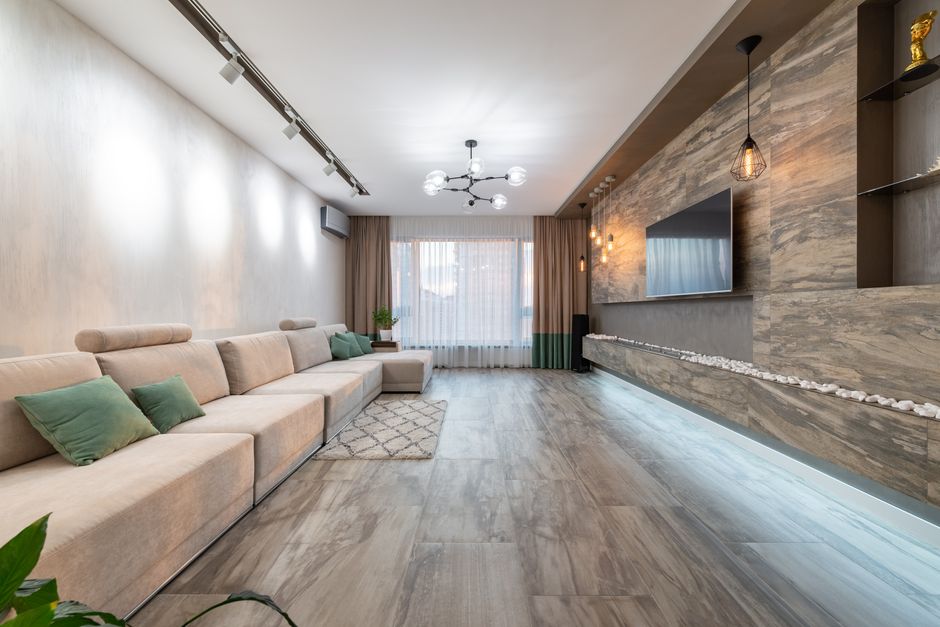
Get the lighting right before anything else. Most students have this exactly backward, and it is the single reason a room that looks good in planning feels flat in person.
The IKEA RANARP floor lamp at $49.99 has a warm-toned finish and shade geometry that work in minimalist rooms without looking trend-dependent. Position it in a corner at a 45-degree angle to the main seating area, angled upward so light reflects off the wall rather than pointing at eye level. Swap every overhead bulb to a warm LED rated at 2700K — a four-pack costs $8 to $12 at Target or Home Depot. In the evenings, run the overhead light off entirely and use only the floor lamp. The atmospheric difference is not subtle. This single change, costing under $65 total, does more work than most furniture decisions.
Textiles: One Rule, Two Items
One woven throw. One plain linen or cotton pillow in a muted tone. That is the full formula. The H&M Home cotton waffle throw costs $25 to $30 and hits the right texture-to-price ratio. Their plain linen cushion covers land at $12 to $15. Target’s Threshold Studio McGee linen collection runs $18 to $25 per pillow but has better fabric weight if longevity matters — the cover holds its shape through washing cycles that the H&M version does not always survive.
Plants Without the Maintenance Problem
IKEA’s FEJKA artificial potted plant series costs $3.99 for small sizes and $7.99 for medium. A medium FEJKA in a monstera or trailing style, placed on the floor beside the POÄNG chair, adds the organic element that keeps minimalist spaces from reading as sterile. It costs under $10 and requires nothing. Real plants work too, but only for students who are consistently in the apartment — a wilting plant on a clear shelf is worse than no plant at all.
Build the room in this sequence: lighting first, surfaces cleared to three items or fewer second, one key seating piece third, textiles fourth, plants last. Students who front-load decor and fix lighting later always spend more and feel less satisfied. Start with the RANARP and the 2700K bulbs, clear the surfaces, and live in the room for a week before buying anything else. It usually needs less than you expect.